Proper pipe alignment is one of the most important steps in pipeline welding. When two pipe ends are not aligned correctly, the difference in their internal or external surfaces is commonly referred to as hi-lo or internal misalignment.
Hi-lo can make welding more difficult, contribute to weld defects, and create unnecessary rework. Understanding what causes pipe misalignment and how to prevent it can help pipeline crews improve fit-up and welding quality.
What Is Hi-Lo in Pipeline Welding?
Hi-lo occurs when two pipe ends are not properly aligned at a welded joint.
When viewed from the inside of the pipe, one pipe end may sit higher or lower than the other. This creates an uneven transition between the two sections.
The amount of acceptable hi-lo depends on the applicable welding procedure, project specifications, and governing codes.
While some degree of variation may be unavoidable in field conditions, excessive misalignment should be corrected before welding continues.
What Causes Pipe Hi-Lo?
Several factors can contribute to hi-lo during pipeline construction.
Inconsistent Pipe Dimensions
Manufacturing tolerances can cause differences in pipe outside diameter, wall thickness, or roundness.
Even when two pipes have the same nominal diameter, variations in actual dimensions can make alignment more difficult.
Damaged Pipe Ends
Pipe ends can become damaged during transportation, handling, storage, or construction.
Dents, deformation, or damage to the bevel can prevent two pipe sections from fitting together correctly.
Incorrect Fit-Up
Improper fit-up is another common cause of hi-lo.
If the pipe ends are not positioned correctly before welding, the joint may have excessive internal misalignment.
Improper Clamp Setup
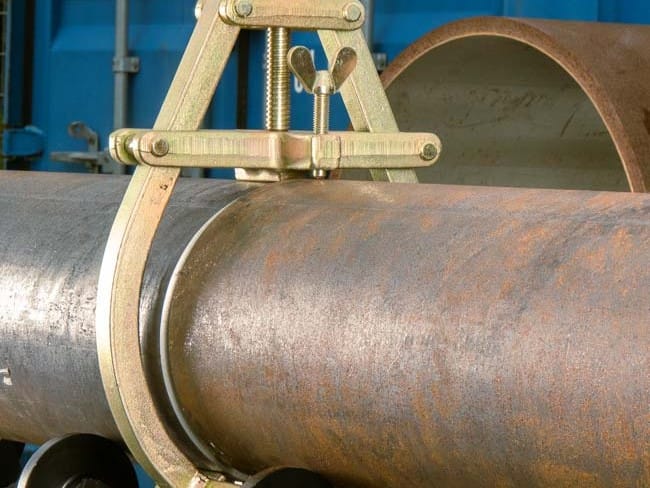
Line-up clamps are designed to help maintain pipe alignment, but they must be installed and operated correctly.
Improper clamp positioning, worn components, or incorrect adjustment can make it difficult to achieve consistent alignment.
Uneven Root Gap
A root gap that varies around the circumference of the pipe can indicate that the pipe ends are not properly aligned.
Consistent spacing and alignment are important for achieving a uniform root pass.
Why Is Hi-Lo a Problem?
Excessive hi-lo can affect both the welding process and the finished joint.
Misalignment can contribute to:
- Difficulty maintaining consistent arc or torch positioning
- Uneven weld penetration
- Incomplete fusion
- Increased grinding
- Additional welding passes
- Higher rework rates
- Inspection failures
The severity of the problem depends on the amount of misalignment and the requirements of the specific project.
How to Prevent Hi-Lo
Preventing hi-lo starts with proper pipe handling and fit-up.
Inspect Pipe Ends Before Fit-Up
Before bringing two pipe sections together, inspect the ends for dents, deformation, damaged bevels, and other conditions that could affect alignment.
Correcting problems before fit-up can save considerable time later.
Use the Correct Line-Up Equipment
A properly sized pipe line-up clamp can make a major difference in achieving consistent alignment.
External and internal line-up clamps are both commonly used in pipeline construction. The correct equipment depends on pipe size, project requirements, and welding procedures.
Maintain Proper Pipe Support
Pipe should be properly supported during fit-up so that its weight does not cause the joint to shift.
Uneven support can change alignment as the pipe moves into position.
Check Alignment Before Welding
Before beginning the weld, the crew should verify the pipe alignment around the joint.
Checking multiple points around the circumference can help identify areas where the pipe needs adjustment.
Internal vs. External Line-Up Clamps for Hi-Lo Control
Both internal and external line-up clamps can help control pipe alignment.
Internal clamps expand against the inside of the pipe and can provide very accurate alignment while leaving the outside of the joint accessible to the welding crew.
External clamps fit around the outside of the pipe and provide a practical solution for many field applications.
The best option depends on the pipe diameter, welding procedure, accessibility, and project requirements.
Can Hi-Lo Be Fixed After Welding?
Preventing excessive hi-lo before welding is generally preferable to trying to correct the problem afterward.
Once welding has begun, correcting significant misalignment can become much more difficult. Depending on the severity of the problem and project requirements, the joint may require additional work or even removal and replacement.
This is why proper pipe fit-up is so important.
The Importance of Consistent Pipe Fit-Up
Good welding starts before the welder strikes an arc.
Accurate pipe alignment, proper root gap, clean bevels, and reliable line-up equipment all contribute to a more consistent welding operation.
Taking the time to properly prepare each joint can reduce welding problems and help pipeline crews avoid costly rework.
Final Thoughts
Hi-lo is a common pipe fit-up challenge, but it can often be minimized through proper preparation and the right pipeline equipment.
Inspecting pipe ends, maintaining proper support, checking alignment, and using the appropriate line-up clamp can help crews achieve better fit-up before welding begins.
For pipeline contractors, investing in reliable pipe alignment and welding equipment isn’t just about making the job easier. It can also help improve productivity, consistency, and overall weld quality.
 English
  Spanish
  French