
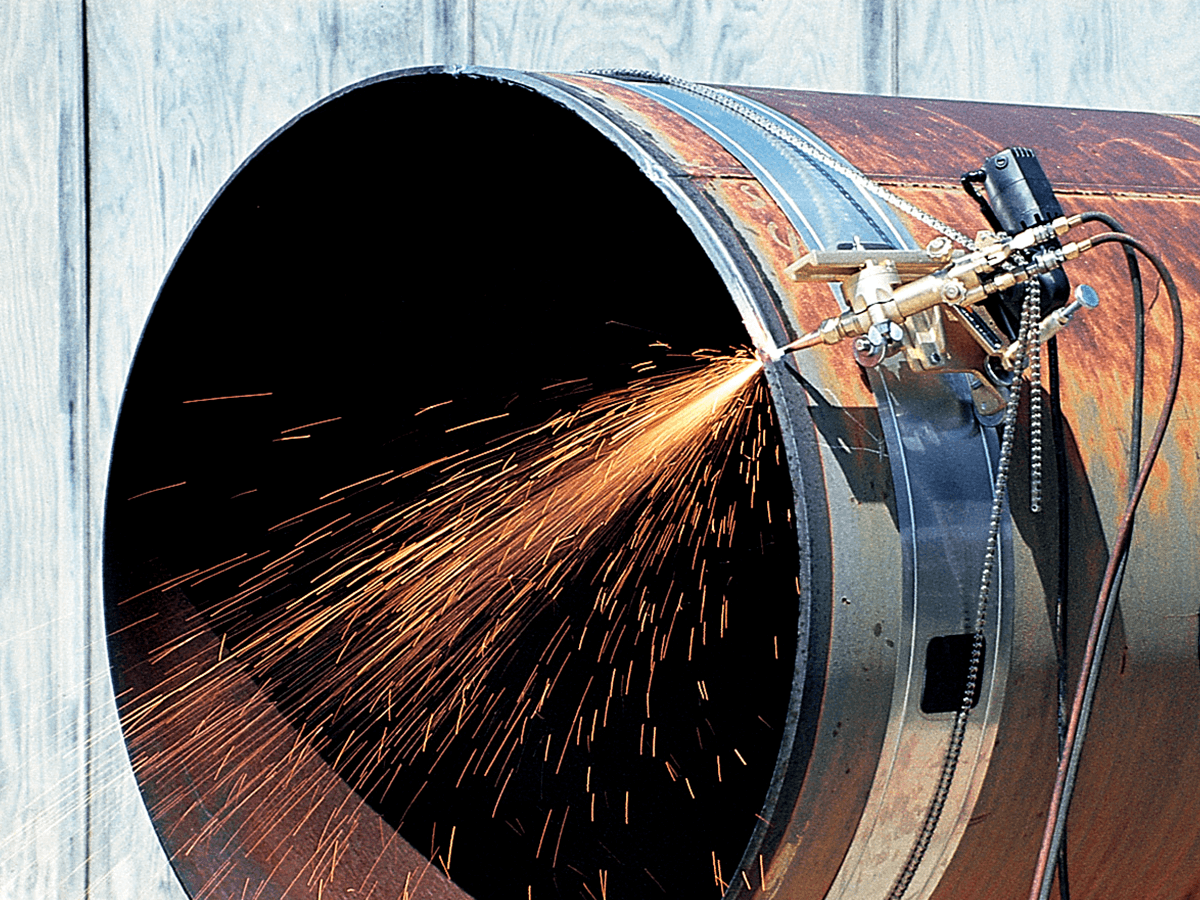
Preparing the end of a pipe correctly is one of the first steps toward producing a quality weld. For pipeline contractors, the right pipe beveling machine can make pipe preparation faster, more consistent, and more efficient.
With different beveling machines available for different pipe sizes, materials, and applications, choosing the right equipment requires more than simply selecting a machine that fits the pipe.
This guide covers the most important factors to consider when choosing a pipe beveling machine for pipeline construction and fabrication.
What Does a Pipe Beveling Machine Do?
A pipe beveling machine removes material from the end of a pipe to create a specific bevel profile for welding.
The machine can help produce consistent:
- Bevel angles
- Root faces
- Pipe end dimensions
- Surface finishes
Consistent pipe preparation is particularly important when a large number of pipe joints need to be prepared for welding.
Why Use a Pipe Beveling Machine?
Pipe ends can be prepared using several methods, including grinding, thermal cutting, and machining.
While manual methods can be useful for repairs and smaller jobs, a dedicated pipe beveling machine offers greater consistency and repeatability.
For production pipeline work, this can translate into:
- Faster pipe preparation
- More consistent bevels
- Reduced operator fatigue
- Less rework
- Improved welding efficiency
Consider the Pipe Diameter
One of the first specifications to consider is the pipe diameter range the machine can accommodate.
Different machines are designed for different pipe sizes. A machine intended for smaller pipe may not be suitable for large-diameter pipeline applications.
Before purchasing or renting equipment, confirm both the minimum and maximum pipe diameter supported by the machine.
Consider the Wall Thickness
Pipe wall thickness is another important consideration.
The machine must have sufficient cutting capacity to prepare the pipe end correctly without exceeding its intended operating range.
If your projects involve multiple wall thicknesses, look for equipment capable of handling the range you regularly encounter.
What Bevel Profile Do You Need?
Not every project uses the same bevel design.
Depending on the welding procedure, you may need to produce:
- Single V-bevels
- Compound bevels
- J-bevels
- Other specialized profiles
The machine should be capable of producing the bevel geometry specified by your welding procedure and project requirements.
Manual vs. Automated Pipe Beveling
The right level of automation depends on the application.
Manual machines can provide flexibility and are often well suited to field work, repairs, and lower-volume applications.
Automated or highly mechanized equipment can provide advantages in high-production environments where large quantities of pipe need to be prepared consistently.
When comparing equipment, consider not only the machine’s speed but also setup time, operator requirements, maintenance, and overall productivity.
Field vs. Shop Applications
Where the machine will be used is another important consideration.
Field Beveling
Pipeline construction often requires equipment that can operate in demanding field conditions.
Field equipment should be:
- Durable
- Portable
- Easy to set up
- Simple to maintain
- Appropriate for the available power source
Shop Beveling
Fabrication shops may prioritize production speed, repeatability, and integration into an established workflow.
A larger stationary or production-oriented beveling machine may be more appropriate when high volumes of pipe are being prepared in one location.
Consider the Power Source
Pipe beveling machines may use different power sources depending on their design and application.
Before choosing a machine, make sure the available power supply at the jobsite is compatible with the equipment.
For remote pipeline projects, power availability can be a particularly important consideration.
Don’t Forget Maintenance
A pipe beveling machine is only useful if it can consistently produce accurate bevels.
Regular maintenance helps keep the equipment operating properly and can reduce unexpected downtime.
Important considerations include:
- Cutter condition
- Lubrication
- Drive components
- Clamping components
- Machine alignment
- Replacement parts availability
Contractors should also consider whether the manufacturer or equipment supplier can provide repair and service support when needed.
Buy, Rent, or Service?
Depending on how frequently the equipment is required, purchasing isn’t always the only option.
For contractors with occasional beveling requirements, renting equipment can provide access to the necessary machine without the long-term cost of ownership.
For companies that use beveling equipment regularly, purchasing may make more sense.
Maintaining existing equipment is another consideration. A properly serviced beveling machine can continue providing reliable performance without requiring replacement.
Choosing the Right Pipe Beveling Machine
Before selecting equipment, identify:
Pipe diameter: What sizes of pipe will you be beveling?
Wall thickness: What is the minimum and maximum wall thickness?
Bevel profile: What bevel geometry does your welding procedure require?
Location: Will the machine be used in the field or in a fabrication shop?
Production volume: How many pipe ends need to be prepared?
Power: What power source is available?
Service: Is repair, maintenance, and replacement-part support available?
Answering these questions will make it much easier to narrow down the right pipe beveling equipment for your application.
Final Thoughts
The right pipe beveling machine can have a significant impact on pipe preparation, welding productivity, and overall project efficiency.
Rather than choosing equipment based solely on price or maximum pipe diameter, consider the complete application: pipe size, wall thickness, bevel requirements, production volume, operating environment, and service support.
For pipeline contractors, investing in the right pipe preparation equipment can help create more consistent weld joints while reducing unnecessary preparation time and rework.
 English
  Spanish
  French