What Are Link Seals?
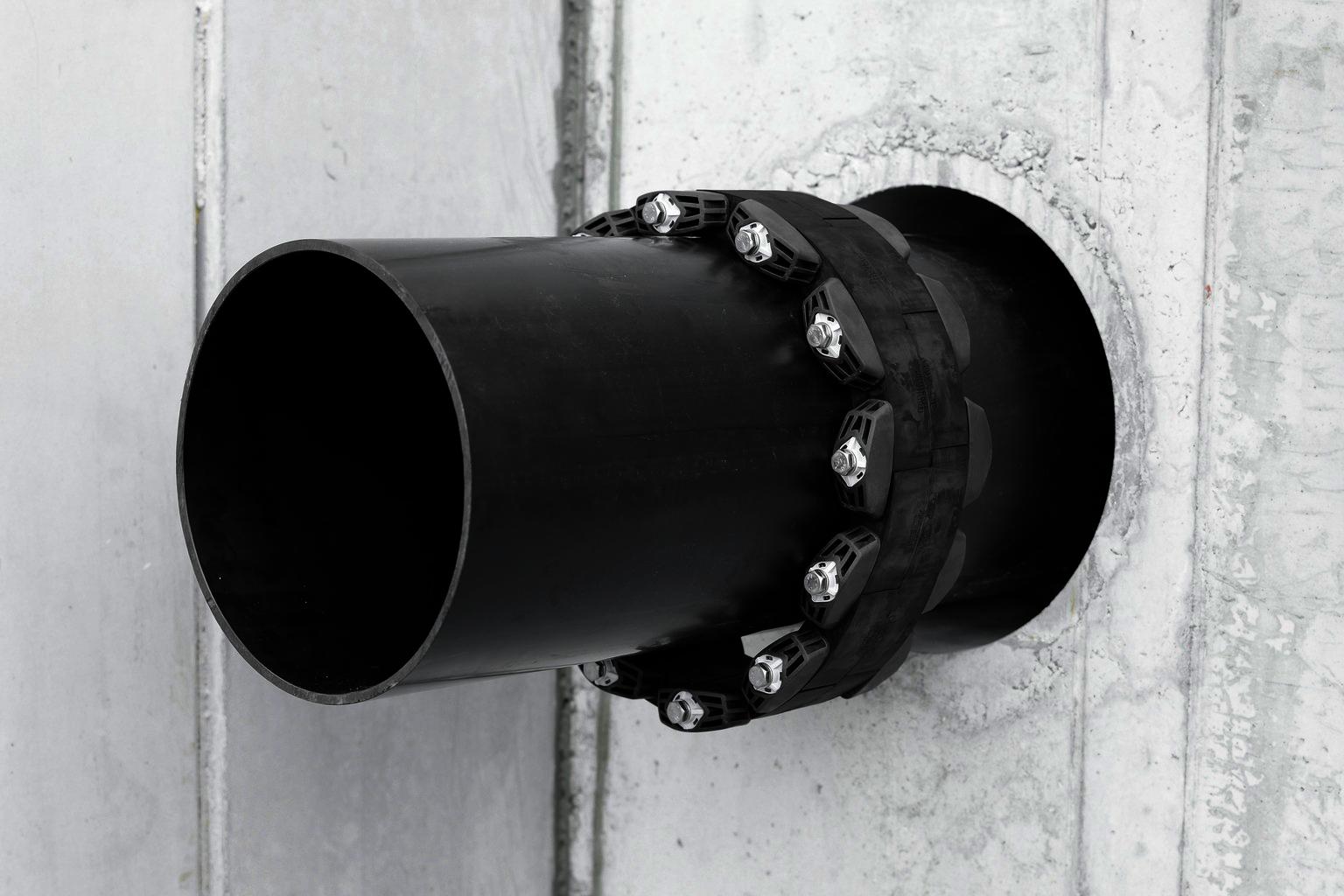
Link seals are modular mechanical sealing systems used to seal the annular space between a pipe and an opening in a wall, floor, or casing.
They are commonly used in water treatment facilities, wastewater infrastructure, industrial buildings, utility installations, and other applications where pipes pass through concrete walls or protective sleeves.
A pipe passing through a wall or casing usually leaves a gap between the outside of the pipe and the inside of the opening. If that gap is not properly sealed, water, moisture, soil, or other contaminants may enter the surrounding structure.
A link seal fills this space using interconnected sealing elements that compress around the pipe and against the opening. Once installed and tightened, the system creates a mechanical seal around the penetration.
How Does a Link Seal Work?
A typical link seal consists of individual elastomeric sealing elements connected by metal pressure plates and bolts.
The elements are assembled into a continuous chain or belt and wrapped around the pipe. The assembly is positioned in the annular space between the pipe and the surrounding wall opening or sleeve.
As the bolts are tightened, the sealing elements compress and expand against the pipe and the opening. This creates contact pressure around the circumference, helping prevent water and other substances from passing through the annular space.
The modular design allows installers to adjust the number of links to suit different pipe and opening dimensions.
The seal is not intended to support the weight of the pipe. The pipe must be properly supported independently, and the surrounding structure must be suitable for the installation.
Where Are Link Seals Used?
Link seals are used in a variety of applications where pipes pass through structures and a dependable seal is required.
Water and Wastewater Infrastructure
Water treatment plants, wastewater facilities, and pumping stations often contain numerous pipe penetrations through concrete walls and floors.
Link seals can help prevent groundwater or process water from entering through these openings and protect surrounding structures from unwanted water intrusion.
Industrial Facilities
Industrial plants frequently route pipes through walls, equipment rooms, foundations, and containment structures.
Mechanical pipe seals can help close these openings and maintain separation between different areas of a facility.
Utility and Mechanical Rooms
Building services such as water lines, heating systems, and other mechanical piping may pass through foundations or underground walls.
A properly selected sealing system helps protect these penetrations against moisture and water infiltration.
Underground Pipe Installations
Link seals can also be used around pipes passing through casing sleeves or other underground structures. The correct design depends on the pressure, environmental exposure, pipe movement, and installation conditions.
Main Components of a Modular Link Seal
Understanding the components makes it easier to see how the system creates a seal.
Elastomeric sealing elements: These flexible components compress around the pipe and against the opening. Material selection depends on the fluid, temperature, and environmental conditions.
Pressure plates: Plates distribute the tightening force across the sealing elements and help them expand evenly.
Bolts and fasteners: These connect the assembly and allow installers to compress the seal. Fastener material should be appropriate for the application and the manufacturer's specifications.
Modular links: Individual elements are connected to form a continuous assembly around the pipe. The number of links depends on the required circumference and the selected seal model.
How to Choose the Right Link Seal
Selecting a link seal requires accurate measurements and an understanding of the installation environment.
Pipe Outside Diameter
Start by measuring the outside diameter of the pipe that will pass through the opening.
The seal must be compatible with this dimension. Do not rely solely on nominal pipe size, as actual outside diameters vary depending on pipe material and standard.
Opening or Sleeve Inside Diameter
Measure the inside diameter of the wall opening or casing sleeve.
The difference between the opening diameter and pipe outside diameter determines the annular space that the seal must fill.
This measurement is essential when selecting the correct link seal model and calculating the required number of elements.
Annular Space
The annular space is the gap between the pipe and the surrounding opening.
A modular seal must be sized for this space so that its sealing elements compress correctly when tightened.
Using the wrong number of links or an incompatible seal size can prevent the elements from making proper contact with both surfaces.
Seal Material
Link seals are available with different elastomer materials and fastener configurations.
Common elastomer options include EPDM and nitrile rubber, although availability varies by manufacturer.
EPDM is often selected for applications involving water and outdoor exposure, while nitrile rubber may be suitable for certain applications involving oils and fuels.
These are general material characteristics, not universal compatibility guarantees. Always verify chemical resistance, temperature limits, and suitability with the manufacturer's technical documentation.
Pressure and Environmental Conditions
Consider whether the penetration will be exposed to groundwater pressure, process fluids, chemicals, temperature changes, or other environmental conditions.
The selected seal must be rated for the intended application. If the penetration is part of a critical containment system, confirm the required pressure rating and installation details with the project engineer or manufacturer.
Basic Link Seal Installation Considerations
Although exact procedures vary by manufacturer, the installation generally follows a few important steps.
First, inspect the pipe and opening to ensure that their surfaces are clean and suitable for sealing. Remove debris and verify that the pipe is properly positioned and supported.
Next, assemble the required number of sealing elements around the pipe according to the manufacturer's sizing information. The modular assembly is then placed into the annular space.
Once positioned, the bolts are tightened gradually and evenly around the circumference. Tightening should follow the manufacturer's sequence and torque or rotation instructions.
Uneven tightening can cause the sealing elements to expand inconsistently and may compromise the seal.
After installation, inspect the assembly to confirm that the elements have compressed properly and that the pipe remains correctly positioned.
For specific installations, always follow the manufacturer's instructions rather than relying on a generic procedure.
Link Seals vs. Other Pipe Sealing Methods
Several products can be used to seal pipe penetrations, but they do not all work in the same way.
Modular link seals use compressible elements mechanically expanded between the pipe and opening. They are useful where a removable, adjustable mechanical sealing system is required.
Non-shrink grout can fill gaps around certain pipe penetrations, but it creates a rigid installation rather than a modular mechanical seal.
Flexible sealants may be used for certain joints and smaller gaps, depending on the material and service conditions. They do not necessarily provide the same mechanical compression or pressure capabilities as a modular seal.
Casing end seals close the ends of a larger casing around a carrier pipe. Their purpose is different from a link seal installed between a pipe and a wall opening or sleeve.
The appropriate solution depends on the geometry, movement, pressure, and performance requirements of the penetration.
Common Link Seal Installation Mistakes
Several mistakes can affect sealing performance:
- Incorrect measurements: An inaccurate pipe or opening diameter can result in the wrong seal selection.
- Incorrect number of links: The assembly must contain the number of elements specified for the selected model.
- Uneven tightening: Tightening bolts inconsistently can cause uneven compression.
- Dirty contact surfaces: Dirt, debris, or other contamination can interfere with proper installation.
- Unsupported piping: Link seals are not designed to carry pipe loads. The pipe must be supported independently.
- Incorrect material selection: Elastomer and fastener materials must be compatible with the service environment.
Careful measurement, proper product selection, and adherence to installation instructions help reduce the risk of leakage and repeat work.
Choosing the Right Mechanical Pipe Seal
Link seals provide a practical solution for sealing the space around pipes that pass through walls, floors, foundations, and casing sleeves. Their modular design allows the assembly to accommodate different pipe and opening dimensions while creating a compressed mechanical seal.
The most important selection factors are pipe diameter, opening diameter, annular space, seal material, and service conditions.
For contractors and facility operators, choosing the right modular sealing system helps protect pipe penetrations and surrounding structures from unwanted water and moisture entry.
 English
 Spanish
 French