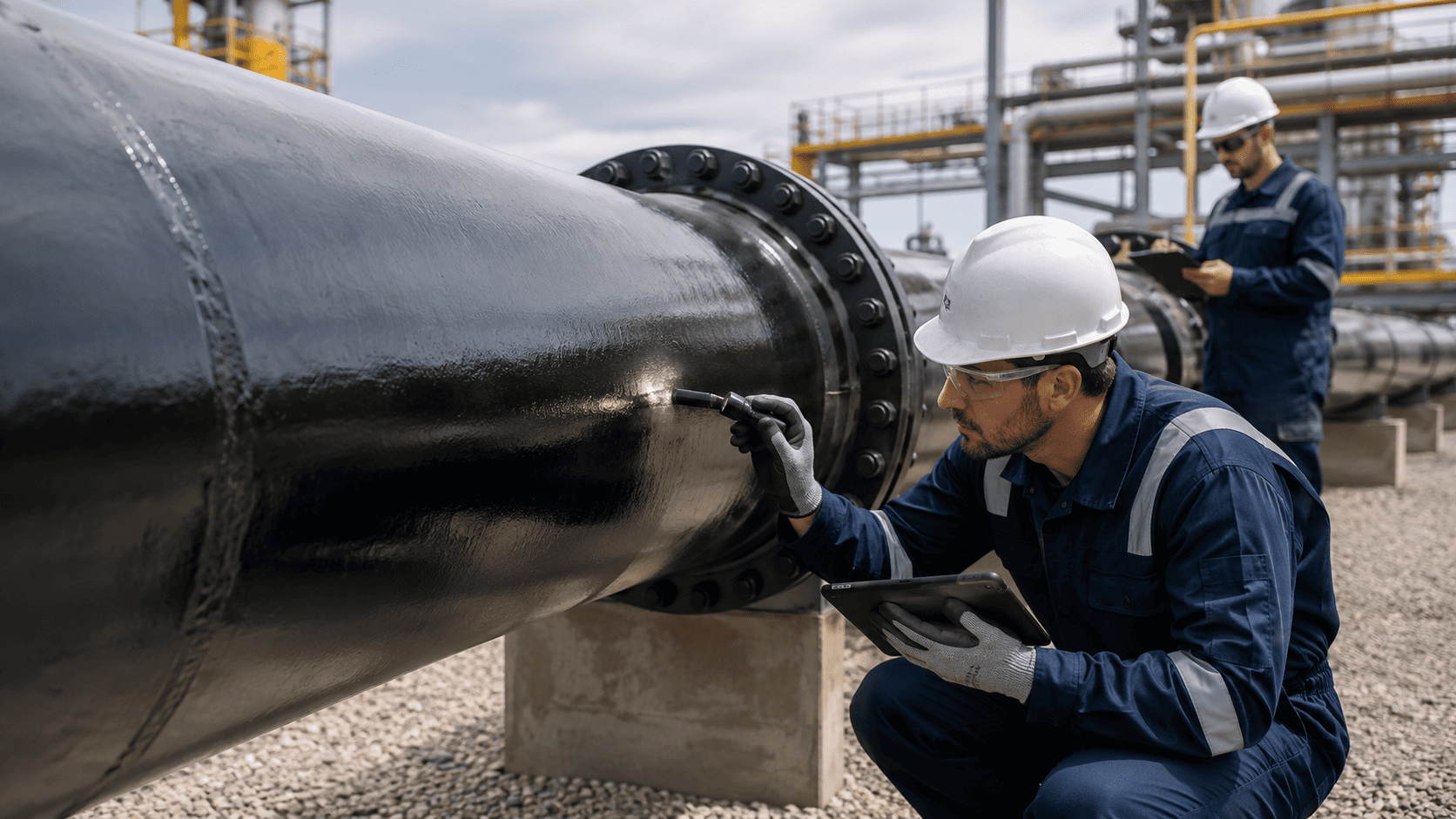
Inspecting a pipeline coating is more than simply looking for visible damage. A complete coating inspection program can involve multiple testing methods, documented procedures, applicable industry standards, and inspections at different stages of pipeline construction.
Coating inspection requirements can vary depending on the coating system, application method, pipeline service, project specifications, and applicable standards.
For contractors and inspectors, understanding these requirements is important for determining whether a coating is ready for the next stage of construction and identifying areas that require repair.
Standards for Pipeline Coating Inspection
Pipeline coating requirements are typically governed by a combination of international standards, project specifications, coating manufacturer requirements, and applicable regulations.
One important family of standards is ISO 21809, which addresses external coatings for buried or submerged pipelines used in pipeline transportation systems.
Different parts of ISO 21809 address different coating systems and applications.
For example, ISO 21809-1 covers plant-applied three-layer polyethylene and polypropylene coatings for steel pipe used in pipeline transportation systems.
ISO 21809-2 addresses single-layer fusion-bonded epoxy (FBE) coatings and includes requirements related to qualification, application, inspection, testing, handling, and storage.
For field joint coatings, ISO 21809-3 addresses coatings applied to the areas left bare after pipe and components are joined by welding.
ISO 21809-11 addresses in-field coating application, coating repair, and rehabilitation of buried pipelines.
These standards should not be treated as a substitute for the project specification. The applicable requirements can vary depending on the pipeline, coating system, operating environment, and jurisdiction.
Contractors should always verify which edition of a standard applies to their specific project and follow the requirements established by the project owner, coating manufacturer, and applicable regulatory authorities.
Pipe Coating Inspection During Pipeline Construction
Coating inspection is not limited to the coating facility.
A pipeline may be exposed to potential coating damage throughout the construction process.
After transportation, the pipe should be inspected for damage that may have occurred during loading, unloading, storage, and handling.
Once the pipe reaches the right-of-way, additional damage can occur during stringing, bending, welding, lowering-in, and other construction activities.
Field joint coatings also require their own inspection and testing procedures. These coatings are applied to the areas left uncoated around pipe ends so that welding can be performed before the joint is coated.
A complete coating inspection program therefore considers the entire construction process rather than inspecting the pipe only once.
Inspecting Coated Pipe After Transportation and Handling
Pipe coating can be damaged even when the coating was properly applied at the manufacturing or coating facility.
Improper lifting equipment, rough handling, contact with other materials, and inadequate storage can create scratches, gouges, dents, or other coating defects.
This is why inspection should be performed after major handling activities.
Pipe should be examined before it moves to the next stage of construction, particularly if it has been transported over long distances or handled multiple times.
For coated pipe, handling equipment should also be selected with consideration for the coating system. The way equipment contacts the pipe can affect the risk of mechanical damage.
Inspecting Field Joint Coatings
Field joint coating is applied after pipe sections have been welded together.
The area around the pipe ends is intentionally left uncoated during the original coating process so that the pipe can be welded in the field. Once the weld is completed and inspected, the exposed section can be prepared and coated.
Field joint coating requires careful surface preparation and application because it must connect effectively with the existing coating on both sides of the joint.
Inspection may include visual examination, coating thickness measurements, holiday detection, and other tests specified for the particular coating system.
The exact inspection process depends on the field joint coating technology being used and the requirements of the project.
Inspecting Repaired Pipe Coatings
Coating repairs should also be inspected after the repair material has been applied.
The inspection requirements depend on the repair system and the nature of the original damage.
The general process may include checking the repaired area visually, verifying coating thickness where applicable, and performing holiday detection or other testing required by the coating specification.
The objective is not simply to cover the damaged area with additional material. The repair should restore the protective function of the coating system according to the applicable procedure.
Repair materials should also be compatible with the existing coating system and suitable for the expected service conditions.
What Happens When a Coating Defect Is Found?
Finding a coating defect does not necessarily mean the pipe must be rejected.
The appropriate response depends on the type, size, location, and severity of the defect and the requirements of the applicable specification.
A small holiday may require a localized repair, while extensive disbondment or mechanical damage may require more substantial coating removal and replacement.
The important steps are to identify the defect, determine its cause where possible, and follow the approved repair procedure.
Once the repair is complete, the area should be inspected again according to the applicable requirements before the pipe proceeds to the next stage of construction.
Choosing the Right Coating Inspection Equipment
The appropriate inspection equipment depends on what needs to be measured or detected.
A basic visual inspection requires different tools than coating thickness measurement or holiday detection.
For contractors working with pipeline coatings, having access to appropriate pipeline inspection equipment can help make coating inspection more consistent and repeatable.
Holiday detectors are particularly useful when inspecting coated pipe for discontinuities that cannot reliably be identified through visual inspection alone.
The detector must be appropriate for the coating system, thickness, and testing requirements. Using the wrong testing voltage or procedure can produce unreliable results or potentially damage the coating.
Equipment Calibration and Verification
Inspection equipment should be maintained and used according to the manufacturer’s requirements.
Where applicable, instruments should be calibrated or verified at the required intervals to ensure that measurements and test results are reliable.
This is particularly important for equipment used to measure coating thickness or perform electrical testing.
Project specifications may establish additional requirements for equipment verification, calibration records, and documentation.
Keeping accurate records can help demonstrate that inspection activities were performed using appropriate equipment and procedures.
Documenting Pipeline Coating Inspection
Documentation is an important part of coating quality control.
Inspection records may include information such as:
- Pipe identification
- Coating system
- Inspection date
- Inspection method
- Equipment used
- Test results
- Defects identified
- Repairs performed
- Final inspection results
- Inspector or technician information
The exact documentation requirements depend on the project and applicable procedures.
Good records also make it easier to trace coating repairs and inspection results if questions arise later in the construction process.
Best Practices for Pipeline Coating Inspection
A consistent inspection process can help identify problems before they become more difficult and expensive to correct.
Contractors and inspectors should follow the project coating specification and approved inspection plan. Inspection equipment should be appropriate for the coating system and maintained according to the manufacturer’s requirements.
Coated pipe should be inspected after transportation and handling, while surface preparation should be verified before field coatings or repairs are applied.
Required coating thickness and holiday testing should be completed using the procedures established for the particular coating system.
When defects are identified, they should be documented and repaired according to an approved procedure. Repaired areas should then be inspected before the pipe moves to the next stage.
Most importantly, inspection should be treated as part of the overall coating process rather than as a final check performed after everything else is complete.
Pipe Coating Inspection and Long-Term Pipeline Protection
The purpose of coating inspection is ultimately to help maintain the protective barrier between the steel pipe and its surrounding environment.
A coating defect that is identified during construction can often be addressed before the pipe is installed. A defect that goes unnoticed may become more difficult to access and repair after the pipeline is buried or placed into service.
This makes inspection an important part of the overall pipeline construction process.
The combination of appropriate coating systems, proper surface preparation, controlled application, careful pipe handling, inspection, and timely repair all contribute to the long-term performance of a pipeline coating.
Conclusión
Pipeline coating inspection involves much more than identifying visible damage. It can include visual inspection, thickness measurement, holiday detection, adhesion testing, surface preparation checks, documentation, and verification of completed repairs.
Industry standards such as the ISO 21809 series provide requirements for various pipeline coating systems and applications, while project specifications and coating manufacturer requirements establish additional criteria that contractors need to follow.
Inspection should continue throughout the pipeline construction process, including after transportation and handling, during field joint coating, and after coating repairs.
For contractors, having the right equipos de tubería and inspection procedures in place can help identify coating problems early and ensure that repairs are properly verified before the pipeline moves to the next stage of construction.
 Spanish
  English
  French