What Is Pipe Preheating?
Pipe preheating is the process of raising the temperature of the pipe or surrounding base material before welding begins.
It is used in many pipeline construction and industrial fabrication applications to help control the cooling rate of the weld and reduce the risk of certain welding defects.
When steel is welded, the area around the weld experiences rapid heating and cooling. Depending on the material composition, wall thickness, joint design, and welding conditions, this can create conditions that increase the risk of cracking.
Preheating raises the temperature of the material before welding, helping control the thermal conditions during the process.
However, not every pipe weld requires preheating. The required temperature and heating procedure depend on the material, welding process, applicable code, and qualified Welding Procedure Specification (WPS).
Why Is Preheating Important in Pipeline Welding?
Preheating can serve several purposes during pipe welding.
Reducing the Risk of Hydrogen-Induced Cracking
One of the main reasons for preheating certain carbon and low-alloy steel welds is to reduce the risk of hydrogen-induced cracking.
Hydrogen can enter the weld area during welding through moisture, contaminants, or welding consumables. When combined with susceptible microstructures and tensile stresses, diffusible hydrogen can contribute to delayed cracking.
Preheating slows the cooling rate of the weld and surrounding material. This can provide more time for hydrogen to diffuse out of the weld region and help reduce the formation of hard, crack-susceptible microstructures.
Preheating is one part of hydrogen control. Appropriate consumables, material cleanliness, welding procedures, and other controls are also important.
Controlling the Cooling Rate
The temperature difference between the weld area and surrounding material influences how quickly heat is removed from the joint.
Thicker pipe walls and certain material conditions can draw heat away from the weld more quickly. Preheating helps reduce this temperature difference and control cooling.
The required thermal conditions depend on the material and welding procedure.
Reducing Thermal Gradients
Preheating can reduce temperature differences between the weld area and surrounding base metal.
This can help manage thermal stresses and shrinkage effects during welding. It does not eliminate residual stress, but it can contribute to better control of the welding process.
Helping Manage Moisture
In some applications, preheating can help remove surface moisture from the area being welded.
This is particularly relevant when working outdoors or in cold and damp conditions. However, preheating should not be used as a substitute for proper cleaning and surface preparation.
When Is Pipe Preheating Required?
Whether preheating is required depends on the welding procedure and the characteristics of the material being welded.
Factors that influence preheat requirements include:
Material composition: Carbon equivalent and alloying elements influence hardenability and susceptibility to cracking.
Pipe wall thickness: Thicker materials generally conduct more heat away from the weld area and may require different preheat conditions.
Welding process and consumables: The amount of diffusible hydrogen associated with the process and consumables can affect the required controls.
Joint restraint: Highly restrained joints can experience greater stresses during cooling and may require additional precautions.
Ambient conditions: Cold weather and moisture can influence the welding environment and the need for temperature control.
The required minimum preheat and maximum interpass temperatures must be established by the applicable qualified welding procedure and project requirements.
There is no single preheat temperature that applies to every pipeline weld.
Common Methods of Pipe Preheating
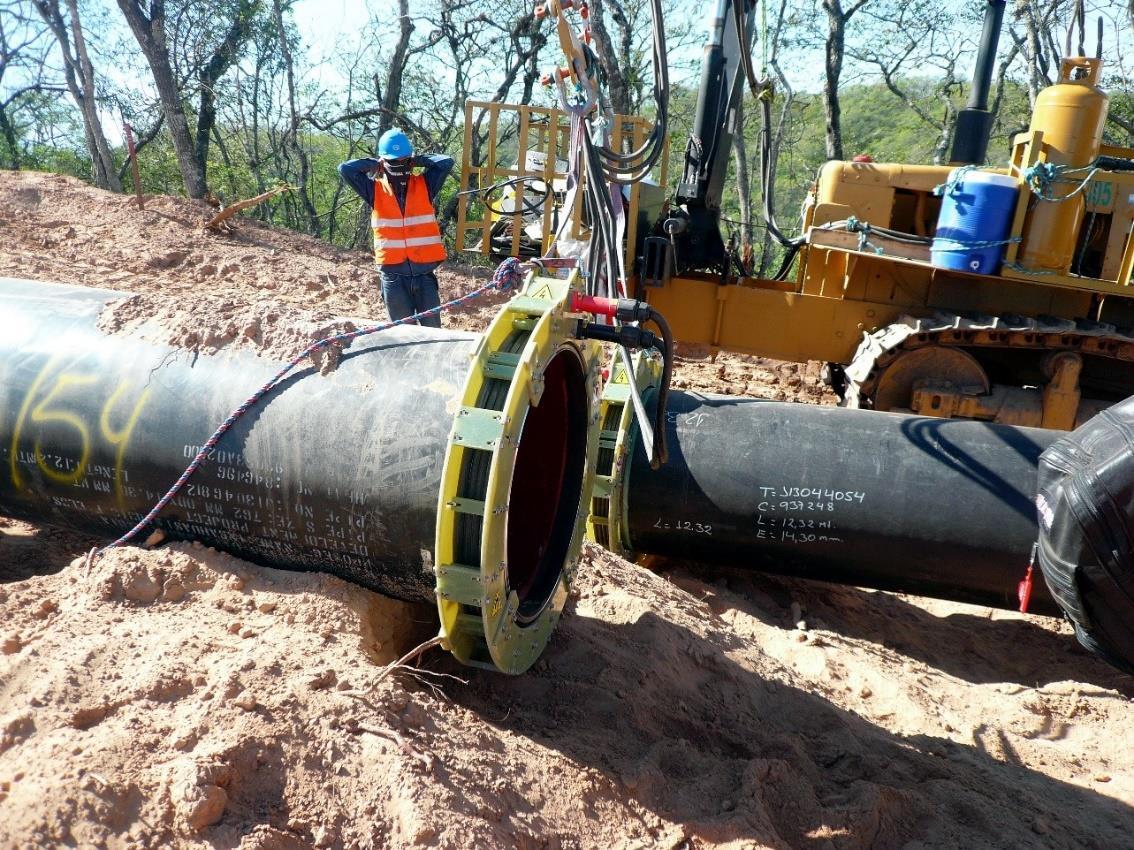
Different heating methods are used depending on pipe dimensions, project requirements, site conditions, and available equipment.
Calentamiento por inducción
Induction heating uses electromagnetic energy to generate heat within electrically conductive material.
An induction coil is positioned around or near the pipe, and the alternating magnetic field induces electrical currents in the steel. The material’s electrical resistance converts this energy into heat.
Induction systems can provide controlled and relatively uniform heating when properly configured. They are particularly useful for applications requiring repeatable temperature control or heating around larger pipe sections.
Advantages can include:
- Controlled heating with suitable equipment and setup.
- Reduced reliance on open flames.
- The ability to heat defined areas of the pipe.
- Integration with temperature monitoring and control systems.
Induction heating requires compatible equipment, appropriate coil positioning, and trained operators. The heating system must also be suitable for the material, pipe dimensions, and welding procedure.
Gas Torch Heating
Gas torches are commonly used for preheating in certain field welding applications.
The torch applies heat directly to the pipe surface. This method can be relatively simple and portable, making it useful where access to more specialized equipment is limited.
However, achieving even heating can be challenging, particularly on larger pipes. Operators must avoid localized overheating and ensure that the required temperature is reached throughout the specified preheat area.
The equipment and fuel system must be suitable for the application, and the heating method must be permitted by the applicable welding procedure.
Resistance Heating
Resistance heating uses electrical heating elements or pads placed against the pipe surface.
Electrical current passes through the heating elements, generating heat that is transferred to the pipe.
Depending on the system, resistance heating can provide controlled heating over a defined area. It may be used in fabrication shops, industrial maintenance, and applications where a consistent heating arrangement is required.
Equipment selection depends on pipe dimensions, required temperature, available power, and the heating area.
How to Choose the Right Pipe Preheating Equipment
Choosing suitable equipment requires an understanding of the welding procedure and the conditions under which the work will be performed.
Pipe Diameter and Wall Thickness
The pipe dimensions influence the heating equipment required.
Larger pipes and thicker walls may require higher heating capacity or a different coil, heating pad, or torch arrangement to achieve the required temperature across the specified area.
Equipment must be suitable for the dimensions of the pipe being welded.
Required Temperature and Heating Area
Review the WPS to identify the required minimum preheat temperature, any maximum interpass temperature, and the area that must be heated.
The equipment must be capable of achieving and maintaining these conditions.
Heating only a small portion of the joint when a wider preheat area is required can result in inconsistent temperature distribution.
Heating Method and Site Conditions
Consider whether the work will take place in a fabrication shop, on a pipeline right-of-way, or in another industrial environment.
Induction systems may be useful for repeatable field or shop applications, while gas torches and resistance heating may suit other approved procedures.
Weather, available electrical power, access around the pipe, and jobsite safety requirements should all be considered.
Temperature Monitoring and Control
Heating equipment is only one part of the process. The temperature must also be measured and maintained according to the WPS.
Depending on the procedure, temperature may be monitored using suitable contact or non-contact instruments, temperature-indicating materials, or thermocouples.
The measurement method must be appropriate for the application and permitted by the governing procedure.
Temperature should be checked at the specified locations and intervals rather than relying on the heating equipment’s displayed settings alone.
Preheat vs. Interpass Temperature
Preheat and interpass temperature are related but refer to different stages of the welding process.
Preheat temperature is the temperature the base material must reach before welding begins.
Interpass temperature is the temperature of the weld area and surrounding material between successive welding passes.
The WPS may specify both a minimum interpass temperature and a maximum allowable temperature. Maintaining the required temperature range helps control the thermal conditions throughout the welding operation.
If the material cools below the specified minimum between passes, additional heating may be necessary before welding continues.
Common Pipe Preheating Mistakes
Poor temperature control can undermine the benefits of preheating. Some common mistakes include:
- Using an incorrect temperature: Applying a generic temperature instead of following the qualified WPS can create unnecessary risks.
- Heating unevenly: Localized heating may leave parts of the joint below the required temperature.
- Failing to monitor temperature: Equipment settings do not necessarily represent the actual temperature of the pipe.
- Ignoring interpass requirements: Allowing the material to cool outside the specified range can affect the welding process.
- Overheating the material: Exceeding the maximum temperature specified by the procedure can create other metallurgical or welding problems.
- Neglecting surface preparation: Preheating does not replace the need to remove moisture, oil, grease, rust, and other contaminants as required.
Proper equipment selection, temperature measurement, and operator training help prevent these issues.
Safety Considerations When Preheating Pipe
Pipe preheating involves high temperatures and, depending on the method, electrical equipment, pressurized fuel systems, or hot surfaces.
Operators should follow the equipment manufacturer’s instructions and the site’s safety procedures.
Important considerations include protecting personnel from burns, managing fire hazards, checking electrical connections and cables, securing fuel supplies, and maintaining safe working distances.
Where induction equipment is used, operators should also follow the manufacturer’s requirements for electromagnetic fields, coil positioning, and nearby equipment.
Appropriate personal protective equipment and a job hazard assessment should be part of the work plan.
Improving Pipeline Welding Quality with Proper Preheating
Pipe preheating is an important temperature-control measure in many welding applications. When required by the welding procedure, it helps manage cooling rates, reduce the risk of hydrogen-induced cracking, and maintain the thermal conditions needed for consistent welding.
The appropriate heating method depends on pipe dimensions, material properties, project requirements, and jobsite conditions. Induction, gas torch, and resistance heating systems each have applications where they may be suitable.
For pipeline contractors and fabrication shops, choosing the right preheating equipment is only part of the process. Accurate temperature monitoring, qualified welding procedures, and trained operators are equally important.
 Spanish
 English
 French