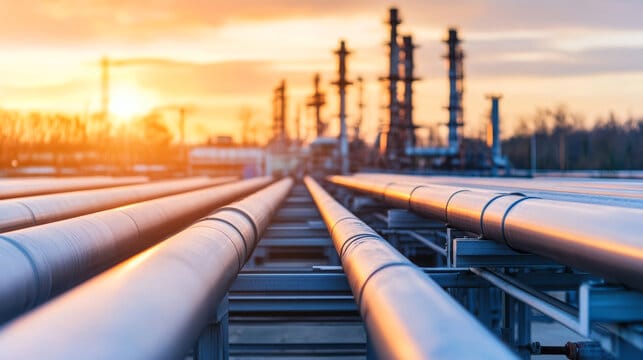
The pipeline construction industry has always relied on skilled workers, heavy equipment, and proven construction methods. While those fundamentals remain unchanged, advances in technology are transforming how pipelines are planned, built, inspected, and maintained.
From GPS-guided surveying and automated welding systems to advanced pipeline equipment and digital inspection tools, modern technology is helping contractors improve safety, increase productivity, and deliver higher-quality projects.
As projects become more complex and schedules more demanding, companies that embrace new technologies are better equipped to reduce costs, minimize downtime, and stay competitive.
Smarter Planning Through Digital Design
Long before construction begins, technology plays a critical role in project planning. Geographic Information Systems (GIS), drone surveys, and 3D modeling allow engineers to evaluate terrain, identify obstacles, and optimize pipeline routes with greater accuracy than ever before.
Digital planning tools also improve communication between engineers, contractors, and project owners by providing detailed visualizations of the project before work begins. This helps reduce design conflicts, improve scheduling, and minimize costly changes during construction.
More Efficient Pipe Bending
Modern pipe bending machines have significantly improved the consistency and efficiency of field bending operations.
Advancements in hydraulic systems, machine controls, and precision tooling allow operators to produce accurate bends while reducing the risk of pipe deformation. Properly matched die sets and internal mandrels help maintain pipe geometry, even on demanding projects where tight tolerances are required.
These improvements reduce material waste, shorten project timelines, and improve the overall quality of the finished pipeline.
Advanced Welding Technology
Pipeline welding continues to evolve through improved equipment and automation.
While skilled welders remain essential, modern welding systems offer greater control, improved repeatability, and enhanced productivity. Automated and mechanized welding systems are increasingly used on large pipeline projects to produce consistent weld quality while helping crews meet demanding schedules.
Proper pipe preparation, including accurate beveling and alignment using quality pipeline equipment, remains essential for achieving reliable welds regardless of the welding method used.
Better Pipe Handling Equipment
Handling large sections of pipe has always presented significant safety and logistical challenges.
Today’s pipe stands, roller systems, lifting equipment, and line-up clamps are designed to improve stability, reduce manual handling, and allow crews to position pipe more efficiently.
These tools not only increase productivity but also contribute to a safer work environment by reducing the risk of dropped loads and worker injuries.
Selecting equipment with the appropriate load rating and application-specific design helps contractors complete work more safely and efficiently.
Digital Inspection and Quality Control
Quality assurance has become increasingly data-driven.
Digital inspection tools now allow inspectors to document welds, coating integrity, dimensional measurements, and equipment performance electronically. Information can be stored, shared, and reviewed in real time, improving traceability throughout the project.
Holiday detectors have also become more advanced, allowing inspectors to accurately identify coating defects before the pipeline is placed into service. Early detection reduces the risk of corrosion and helps ensure long-term pipeline reliability.
Equipment Reliability Through Preventive Maintenance
Technology isn’t only changing how pipelines are built—it’s also changing how equipment is maintained.
Many contractors now use digital maintenance systems to schedule inspections, track service intervals, and record equipment history. This proactive approach helps identify potential problems before they lead to unexpected failures or costly downtime.
Routine maintenance supported by digital records extends equipment life while improving fleet reliability across multiple job sites.
Improved Jobsite Safety
Safety technology continues to evolve across the construction industry.
Modern pipeline equipment is designed with improved guarding, ergonomic controls, enhanced hydraulic systems, and safety features that help reduce operator risk.
At the same time, digital safety management systems allow contractors to monitor inspections, equipment certifications, and worker training more effectively.
Combining quality equipment with proper training and preventive maintenance creates safer working environments while helping companies meet increasingly stringent safety standards.
Data-Driven Decision Making
One of the most significant changes in pipeline construction is the growing use of data.
Project managers now have access to real-time information on equipment utilization, maintenance schedules, production rates, inspection results, and project progress.
This data allows teams to make faster, more informed decisions that improve efficiency and reduce delays.
By identifying trends early, contractors can better allocate resources, optimize equipment usage, and avoid unnecessary costs.
The Future of Pipeline Construction
Emerging technologies continue to shape the future of the pipeline industry.
Artificial intelligence, machine learning, robotics, drones, and remote monitoring systems are expected to play an even greater role in planning, construction, inspection, and maintenance over the coming years.
While technology will continue to evolve, one thing remains constant: successful pipeline projects depend on reliable equipment, skilled operators, and a commitment to quality and safety.
Companies that invest in both their people and their equipment will be well positioned to meet the challenges of tomorrow’s pipeline industry.
Final Thoughts
Technology is transforming every stage of pipeline construction, from project planning and pipe bending to welding, inspection, maintenance, and jobsite safety.
These innovations help contractors improve accuracy, increase productivity, reduce downtime, and deliver safer, higher-quality projects.
At Proline Pipe Equipment, we understand the importance of reliable, modern pipeline equipment in today’s construction environment. We supply and support a wide range of equipment—including pipe bending machines, line-up clamps, beveling machines, pipe stands, lifting equipment, and coating inspection tools—to help contractors complete projects efficiently and safely.
As technology continues to advance, we’re committed to providing the equipment and expertise our customers need to stay ahead.
 English
  Spanish
  French