Lifting Equipment Inspection & Safety Guidelines
Pipe Lifting Hooks
Pipe lifting hooks play a critical role in the safe handling of pipe during fabrication, transportation, and pipeline construction activities. To help ensure safe operation, every pipe lifting hook should be thoroughly inspected before being placed into service and at regular intervals throughout its working life.
At Proline Pipe Equipment, every pipe lifting hook undergoes a detailed inspection before being offered for sale. The following checks are performed to verify the condition and integrity of the equipment.
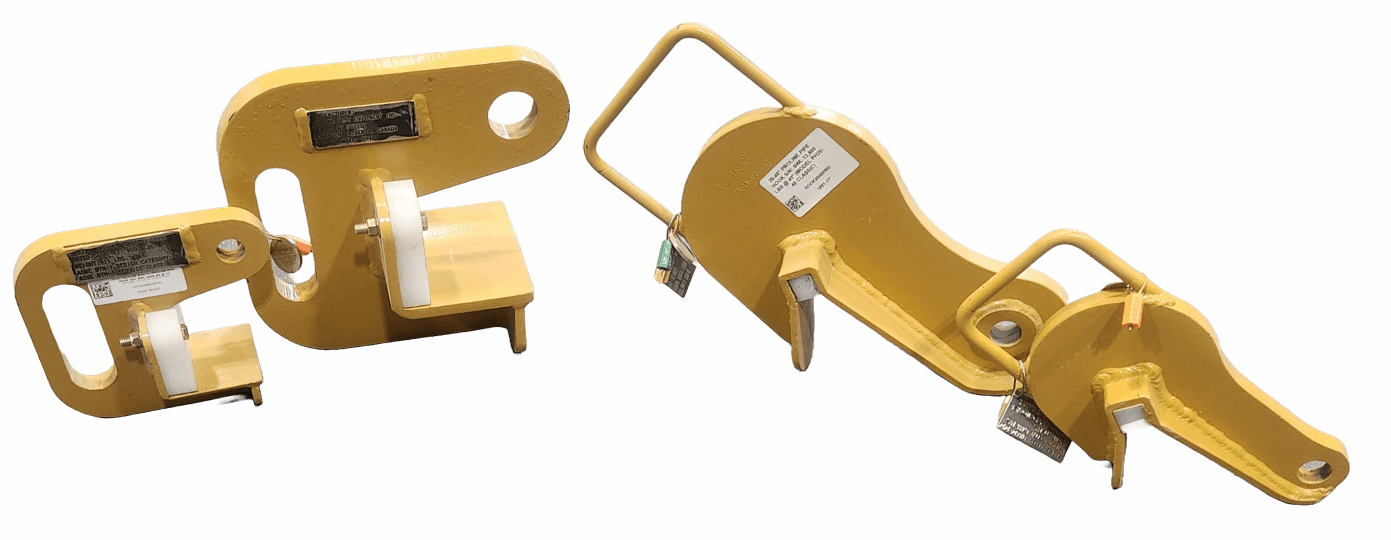
Our Pipe Lifting Hook Inspection Process
- Verification of Pull Test Certification
The pull test certificate is reviewed to confirm that the pipe lifting hook has successfully undergone load testing and meets the manufacturer’s or applicable industry requirements.
Where available, certification documents are verified to ensure they correspond to the specific hook being inspected.
If certification is missing or cannot be verified, additional evaluation may be required before the hook can be approved for service.
- Identification Tag Inspection
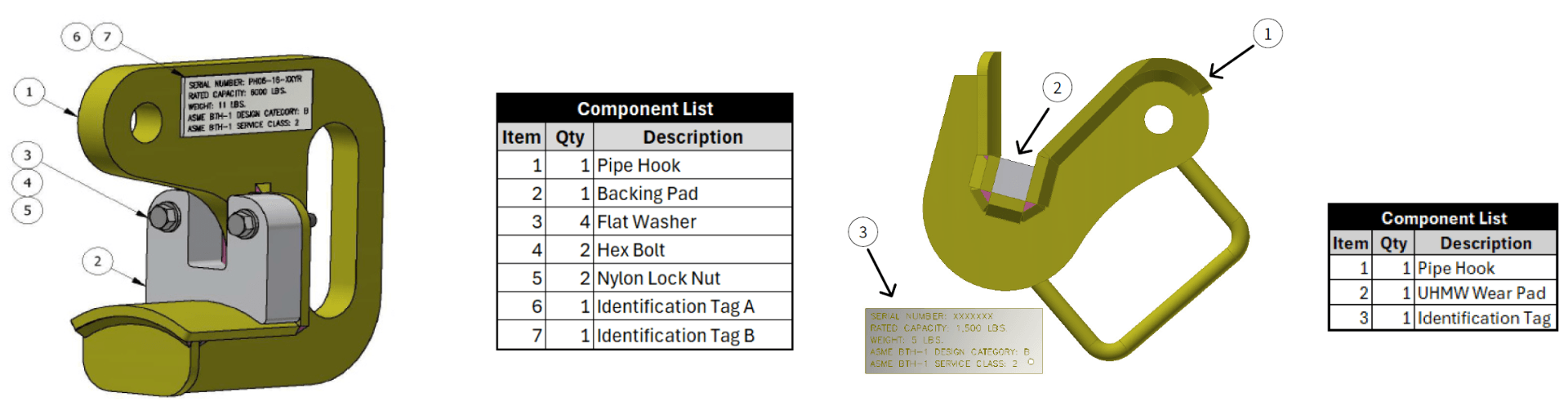
All identification tags and markings are inspected to ensure they are present and legible.
Important information typically includes:
- Manufacturer name
- Model number
- Serial number
- Working Load Limit (WLL)
Hooks with missing, damaged, or illegible identification markings may not provide sufficient traceability or capacity information and should not be placed into service until properly evaluated.
- Verification of Complete Assembly
Each pipe lifting hook is inspected to confirm that all original components are present and correctly assembled.
Missing or improperly installed components can compromise the safe operation of the hook and must be corrected before use.
- Visual Inspection of Structural Components
All components are visually inspected for signs of wear, damage, or deterioration that could affect the strength or functionality of the hook.
Inspection items include:
- Cracks or fracture indications
- Bent, twisted, or distorted components
- Excessive wear on contact surfaces
- Gouges, deep scratches, or impact damage
- Corrosion, rust, or pitting
- Evidence of unauthorized welding, grinding, or modifications
- Heat damage or discoloration
- Deformation around load-bearing areas
Any condition that may affect the structural integrity of the pipe lifting hook is cause for further evaluation or removal from service.
- Fastener and Connection Inspection
All nuts, bolts, pins, retaining clips, and other fastening components are inspected to ensure they are:
- Present
- Properly installed
- Secure and tight
- Free from excessive wear or damage
Loose or damaged fasteners can result in component failure during lifting operations and must be repaired or replaced before the hook is returned to service.
Ongoing Inspections by the Owner
Pipe lifting hooks should be visually inspected by the operator before each use and periodically by qualified personnel throughout their service life.
Users should regularly check for:
- Missing identification tags
- Cracks or structural damage
- Excessive wear
- Corrosion
- Loose fasteners
- Missing components
- Improper operation of moving parts
Any hook that shows signs of damage or questionable condition should be removed from service immediately and inspected by a qualified person.
Safety Reminder
Pipe lifting hooks are designed for lifting applications only and should always be used within their rated Working Load Limit. Proper inspection, maintenance, and safe lifting practices are essential for preventing equipment failure, property damage, serious injury, or death.
If you have questions regarding the inspection, certification, or safe use of a pipe lifting hook, please contact our team for assistance.
 English
  Spanish
  French