Handling large-diameter pipe is one of the most important parts of pipeline construction. Before a pipe is welded, coated, or installed, it may need to be unloaded, transported, positioned, rotated, aligned, and supported several times. Using the right equipment can make these operations more efficient while helping protect the pipe and the people working around it.
From pipe stands and rollers to lifting attachments and specialized handling tools, pipeline pipe handling equipment is available for many different stages of a project. The right combination depends on pipe size, weight, terrain, construction method, and the specific task being performed.
This guide covers some of the most common equipment used for handling pipe during pipeline construction and explains what each type of equipment is designed to do.
Why Is Pipe Handling Equipment Important?
Steel pipe can be extremely heavy, particularly when working with large-diameter pipe and thick wall thicknesses. Moving or positioning pipe manually is not practical and can create significant safety risks.
Pipeline contractors need equipment that can safely support and move pipe while minimizing the possibility of damage. Pipe coatings are particularly important to protect during handling because damaged coating can lead to additional repair work and potentially affect the long-term performance of the pipeline.
Good pipe handling equipment also helps crews maintain a steady workflow. Instead of repeatedly improvising ways to support or position pipe, workers can use equipment designed specifically for the job.
Efficient pipe handling can also reduce unnecessary movement and make activities such as welding, fit-up, beveling, and coating preparation easier.
Common Types of Pipeline Pipe Handling Equipment
There is no single piece of equipment that handles every pipe-handling task. Pipeline projects typically use a combination of equipment throughout the construction process.
Some of the most common categories include:
- Pipe stands and supports
- Pipe rollers
- Pipe hooks and lifting tools
- Pipe lifting attachments
- Pipe skids and cradles
- Excavator attachments
- Pipe handling equipment for welding and fit-up
Each serves a different purpose, and selecting the appropriate equipment starts with understanding what the crew needs to accomplish.
Pipe Stands and Pipe Supports
Pipe stands are used to support pipe above the ground and maintain a stable working position.
They can be used during welding, beveling, inspection, coating, and other operations where workers need access around the pipe. By keeping the pipe elevated, stands can provide clearance for equipment and make it easier for crews to work around the pipe.
Different types of pipe stands are available for different applications. Some are designed for stationary support, while others can incorporate rollers or other features that allow the pipe to move or rotate.
For pipeline construction, the stand’s load capacity and compatibility with the pipe diameter are important considerations. The ground conditions should also be taken into account when selecting support equipment for field use.
Pipe Rollers
Pipe rollers allow pipe to move or rotate while remaining supported.
They are particularly useful when pipe needs to be rotated during welding, coating, inspection, fabrication, or other operations. Instead of dragging the pipe across the ground, rollers provide controlled contact points that allow the pipe to move more easily.
Pipe rollers can also be used in fabrication shops and other controlled environments where sections of pipe need to be positioned repeatedly.
One important consideration is the relationship between the roller and the pipe. The equipment needs to have an appropriate load rating and configuration for the pipe being handled.
For coated pipe, using suitable rollers can also help reduce the risk of unnecessary coating damage during movement.
Pipe Hooks and Lifting Tools
Pipe hooks are specialized tools designed to assist with lifting and positioning pipe.
They can be used with cranes, excavators, or other lifting equipment depending on the design and application. Proper lifting equipment can make it easier to pick up pipe while maintaining control of the load.
Because pipe can shift or roll unexpectedly, lifting tools need to be selected according to the pipe diameter, weight, lifting method, and equipment being used.
Operators should always follow the manufacturer’s instructions and the applicable lifting and rigging requirements for the equipment.
Pipe Lifting Attachments
Large pipeline projects often require equipment capable of moving pipe efficiently over significant distances or positioning it along the right-of-way.
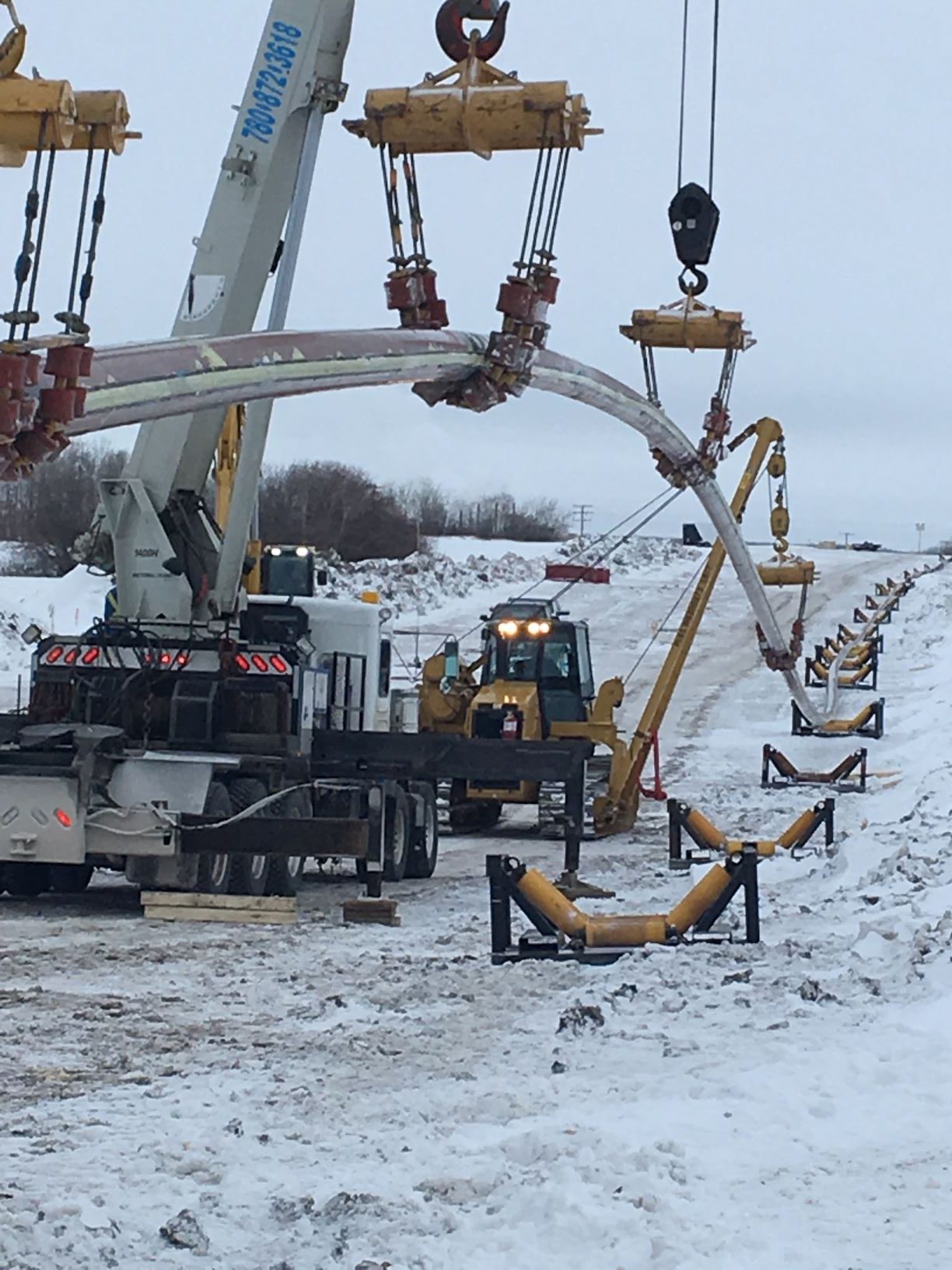
Specialized lifting attachments can be mounted to excavators and other machines to handle pipe without requiring a separate crane for every operation.
Excavator-mounted pipe handling attachments can be particularly useful when working in areas where maneuverability is important. Depending on the attachment, they can be used to pick up, move, position, or support pipe during construction.
The attachment must be properly matched to the carrier machine and the pipe being handled. Rated capacity, pipe diameter, operating conditions, and the manufacturer’s requirements all need to be considered.
Pipe Skids and Cradles
Pipe skids and cradles provide another method of supporting and moving pipe.
They are often used when pipe needs to be stored temporarily, transported over short distances, or positioned along a construction site.
Cradles can provide a larger contact area than some smaller support points, which can be useful when protecting the pipe or maintaining stability.
The appropriate solution depends heavily on the application. A support designed for temporary storage may not be suitable for moving pipe, just as a roller designed for controlled rotation may not be appropriate for long-term storage.
Pipe Handling During Welding
Pipe handling equipment plays an important role in pipeline welding.
Before welding can begin, pipe sections need to be positioned correctly and supported securely. Crews may use pipe stands, rollers, excavators, and other equipment to bring pipe into the required position.
Once the pipe is positioned, other equipment such as internal or external line-up clamps can be used to align the pipe ends for welding.
This is one reason pipe handling and welding equipment often work together. Moving the pipe into position is only the first step. Maintaining proper support and alignment throughout the welding process is equally important.
Pipe Handling During Beveling and End Preparation
Pipe end preparation is another stage where proper support can make a significant difference.
Beveling machines need stable access to the pipe end, and the pipe must remain properly supported during the operation. Depending on the equipment and application, pipe stands, rollers, or other supports can be used to keep the pipe at a suitable working height.
Proper support can also make it easier to position the pipe consistently and move it between different stages of the fabrication or welding process.
For large-diameter pipe, this becomes particularly important because even relatively small movements can require significant effort without the right equipment.
Handling Pipe Without Damaging the Coating
Pipe coating is designed to protect the steel from the surrounding environment, so protecting that coating during transportation and installation is an important consideration.
Dragging coated pipe across rough surfaces can create unnecessary damage. Improper lifting equipment can also create concentrated loads that may damage the coating or deform the pipe.
For this reason, contractors should consider not only how much weight a piece of handling equipment can support, but also how it contacts the pipe.
Equipment should be selected and operated according to the pipe manufacturer’s requirements, coating specifications, and project procedures.
If coating damage does occur, it should be identified and addressed according to the applicable repair procedure before the pipe is placed into service.
Choosing the Right Pipe Handling Equipment
The right equipment depends on several factors.
Pipe Diameter and Weight
The diameter and weight of the pipe determine the capacity required from stands, rollers, lifting attachments, and other equipment.
A support designed for smaller pipe should never be assumed to be suitable for a larger or heavier section simply because it appears physically capable of supporting it.
Ground Conditions
Pipeline construction often takes place in changing terrain. Soft ground, uneven surfaces, slopes, and other site conditions can affect equipment stability.
Equipment intended for field use should be suitable for the conditions where it will operate.
Type of Operation
The equipment required to unload pipe from a truck is different from the equipment required to rotate pipe during welding.
Before selecting equipment, identify the actual task: lifting, transporting, positioning, supporting, rotating, or storing pipe.
Pipe Coating
Coated pipe may require additional consideration because the handling method needs to minimize the possibility of coating damage.
The contact surfaces, load distribution, and movement method can all affect the pipe coating.
Equipment Compatibility
Lifting attachments and other specialized equipment must be compatible with the machine operating them.
For excavator-mounted equipment, this includes considerations such as carrier weight, hydraulic requirements, lifting capacity, and attachment compatibility.
Inspecting Pipe Handling Equipment
Regular inspection is an important part of safe pipe handling.
Before use, equipment should be checked for visible damage, excessive wear, loose components, deformation, and other conditions that could affect its performance.
Lifting equipment requires particular attention because damage or wear to a lifting component can have serious consequences.
Inspection requirements will depend on the type of equipment, manufacturer instructions, applicable regulations, and the project’s safety procedures.
Equipment that does not meet the required condition or capacity should be removed from service until it has been properly evaluated and repaired or replaced.
Pipe Handling Equipment for Different Pipeline Stages
One of the advantages of using specialized pipeline equipment is that different tools can be used throughout the construction process.
During unloading and staging, lifting equipment and pipe hooks may be used to move pipe from trucks or storage areas.
During stringing and positioning, excavator attachments, pipe supports, and other handling equipment can help place pipe along the right-of-way.
During welding and fabrication, pipe stands and rollers can provide stable support and controlled movement.
During fit-up, line-up clamps help bring pipe ends into the required alignment.
This means that pipe handling equipment is not limited to one specific stage of pipeline construction. It is part of a larger workflow that connects material handling, welding, coating, inspection, and installation.
Why Specialized Pipeline Equipment Matters
Pipeline construction involves moving large and heavy materials through environments that can change significantly from one section of a project to another.
General-purpose equipment can perform some pipe-handling tasks, but specialized pipeline equipment is designed around the unique requirements of handling pipe.
Using purpose-built equipment can help crews perform repetitive tasks more efficiently while providing appropriate support and control for the pipe.
The key is selecting equipment based on the actual application rather than simply choosing the largest or most capable machine available.
Conclusion
Pipe handling is an essential part of pipeline construction, from the moment pipe arrives at a staging area to the point where it is positioned, welded, coated, inspected, and installed.
Pipeline pipe handling equipment includes a wide range of tools and machines, including pipe stands, rollers, hooks, lifting attachments, skids, cradles, and excavator-mounted equipment. Each type is designed for different handling requirements.
The best equipment for a particular project depends on factors such as pipe diameter, weight, coating, terrain, handling method, and the specific operation being performed.
By selecting equipment that is properly matched to the pipe and the job, contractors can create a more controlled and efficient pipe-handling process while helping protect both the material and the people working around it.
For pipeline contractors, having access to the right pipeline equipment for each stage of construction can make a significant difference in how efficiently a project moves from pipe delivery to final installation.
 English
  Spanish
  French