Pipe bending is a controlled process, but steel does not always stay exactly where it is placed after the bending force is removed. A pipe may partially return toward its original shape after it has been bent. This phenomenon is known as springback.
Springback is an important consideration in pipeline construction and pipe fabrication because even a small change in the final bend angle can affect how a section of pipe fits into the overall pipeline alignment.
Understanding what causes springback and how it can be controlled is an important part of selecting and operating pipeline equipment, particularly hydraulic pipe bending machines.
What Is Springback in Pipe Bending?
Springback occurs when a pipe partially returns toward its original shape after the bending force is released.
When steel pipe is bent, the material experiences both elastic and plastic deformation. Plastic deformation permanently changes the shape of the pipe, while elastic deformation is recoverable.
As the bending force is removed, some of the elastic deformation is released. The result is a slight change in the pipe’s final shape or bend angle.
For example, if a bending machine forms a pipe to a specific angle, the pipe may relax slightly after it is released from the machine. The final angle may therefore be somewhat different from the angle measured while the pipe was still under load.
This difference is what pipeline contractors and equipment operators need to account for when producing accurate bends.
Why Does Springback Happen?
The basic cause of springback is the elastic behavior of the steel.
During bending, the material on the outside of the bend is placed primarily in tension, while the material on the inside is placed primarily in compression. Somewhere between these areas is a neutral region where the deformation behavior differs.
Not all of the deformation is permanent. Once the bending force is removed, the elastic portion of the deformation attempts to recover.
The amount of springback can vary depending on several characteristics of the pipe and the bending operation.
Factors That Affect Pipe Springback
Material Properties
The mechanical properties of the pipe have a significant effect on springback.
Steel with different yield strengths and other material characteristics can respond differently to the same bending force. Higher-strength materials can require greater force to achieve a particular bend and may exhibit different springback behavior.
This is one reason bending procedures should be developed around the actual pipe being used rather than assuming that every pipe will behave identically.
Pipe Diameter and Wall Thickness
Pipe geometry also affects the bending process.
Diameter and wall thickness influence the relationship between the pipe’s stiffness and the bending forces being applied. Two pipes with the same material grade but different dimensions can therefore behave differently during bending.
For large-diameter pipeline applications, these characteristics need to be considered when selecting the bending machine and tooling.
Bend Radius
The required bend radius can influence the amount of deformation and the forces involved in forming the bend.
Tighter bends generally require greater deformation than larger-radius bends. The bending procedure and equipment therefore need to be appropriate for the required geometry.
Bending Equipment
The design and capacity of the bending machine can also affect the bending process.
Hydraulic pipe bending machines are designed to apply controlled force through a specific arrangement of dies and tooling. Equipment must be properly matched to the pipe diameter, wall thickness, material, and required bend.
Using the correct equipment helps operators apply a repeatable bending procedure and compensate for the pipe’s behavior.
Bending Procedure
Springback is not something that can simply be eliminated by using a larger machine.
The bending procedure itself plays an important role. Operators may need to account for the expected springback when determining how far to bend the pipe before releasing the machine.
Actual procedures will depend on the equipment, pipe specifications, required bend, and applicable project requirements.
How Is Springback Controlled?
Springback can be managed through a combination of proper equipment selection, bending procedures, measurement, and operator experience.
Overbending
One common method of compensating for springback is to bend the pipe slightly beyond the desired final angle.
The pipe is intentionally formed past the target because the operator expects it to relax slightly when the bending force is removed.
The amount of overbend required is not universal. It depends on the characteristics of the pipe and the bending operation.
For this reason, operators should use established bending procedures and equipment-specific guidelines rather than applying a fixed correction factor to every pipe.
Accurate Measurement
Measurement is another important part of controlling springback.
After a bend is produced, the final geometry can be checked against the required bend angle and other project specifications. The results can then be used to make adjustments to subsequent bends when appropriate.
Accurate measurement becomes particularly important when multiple bends are being produced for the same project.
Proper Tooling
Bending dies need to be properly matched to the pipe and the bending machine.
The dies transfer the bending forces into the pipe, so the tooling configuration has a direct effect on how the pipe is formed.
Using the correct die set for the pipe being bent helps provide more predictable results and reduces the risk of producing inconsistent bends.
Internal Support
Internal mandrels can provide support inside the pipe during bending.
Their primary purpose is to help control deformation of the pipe cross-section, particularly during more demanding bending operations. By supporting the inside of the pipe, a properly selected mandrel can help maintain the required geometry during the bending process.
Mandrels do not simply “stop” springback, however. Springback is primarily related to the elastic recovery of the steel, while a mandrel is mainly concerned with controlling the pipe’s shape and deformation during bending.
Understanding this distinction is important when selecting pipeline bending equipment.
Can Springback Be Eliminated?
In practical pipe bending applications, springback is generally something that must be managed rather than completely eliminated.
Steel will retain some elastic behavior regardless of how carefully the pipe is bent.
The goal is therefore to understand how the pipe and equipment behave and incorporate that behavior into the bending procedure.
A consistent bending machine, appropriate tooling, accurate measurement, and experienced operators can all contribute to producing bends that meet the required specifications.
Springback in Field Pipeline Construction
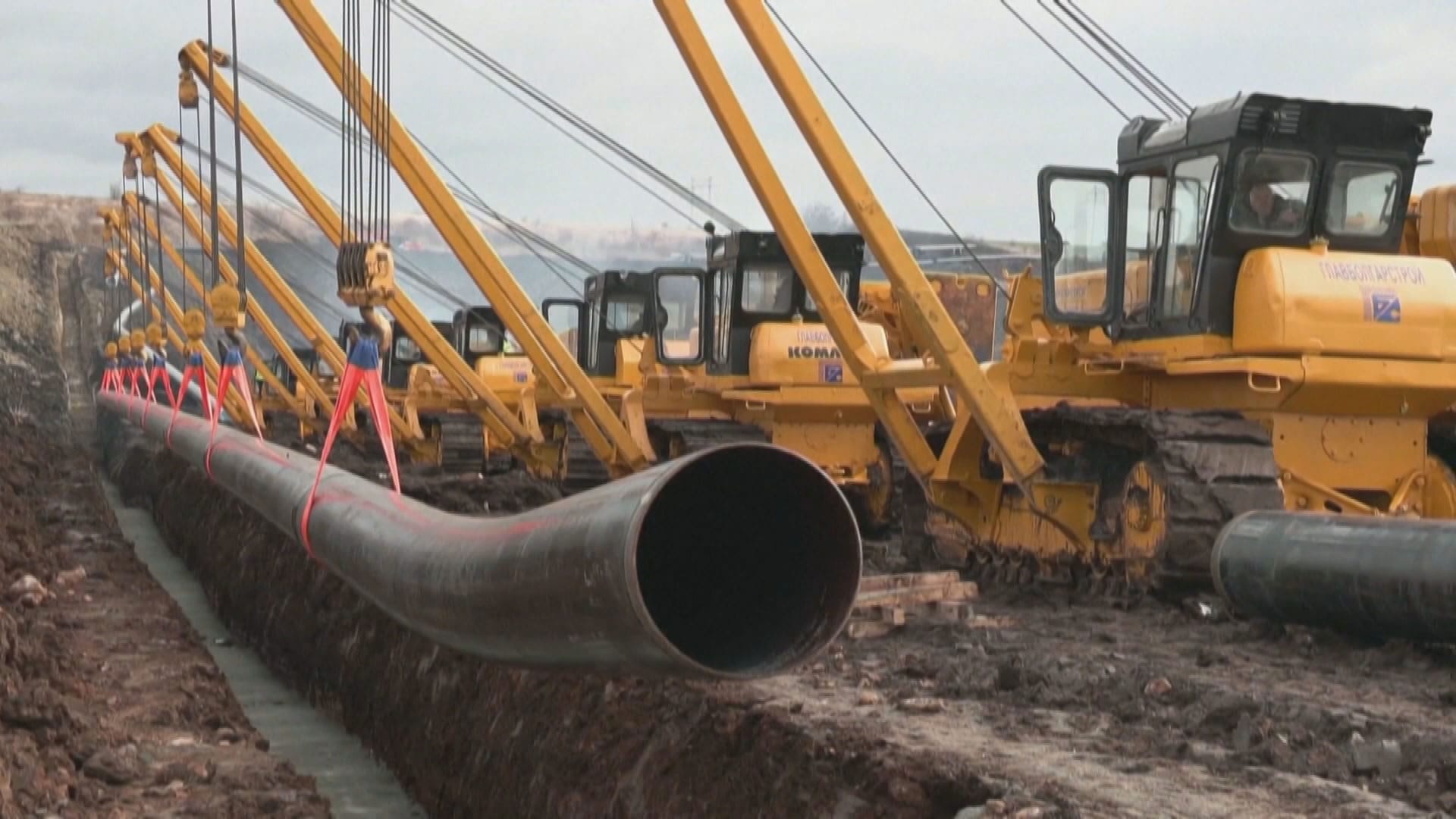
Springback can be particularly important when pipe is bent directly on the right-of-way.
Field bending allows contractors to adapt pipe to the actual terrain and alignment of the pipeline. However, the finished bend still needs to meet the project’s requirements.
Operators may need to account for springback when producing field bends so that the pipe reaches the intended final geometry after it is released from the bending machine.
Field conditions can introduce additional variables, including temperature, equipment setup, pipe positioning, and differences between individual pipe sections.
This makes repeatable procedures and proper inspection especially important.
Springback and Pipe Bending Machines
A hydraulic pipe bending machine provides the force required to permanently deform the pipe, but the machine does not change the basic material behavior of the steel.
The operator and bending procedure must account for the pipe’s response to the applied force.
Modern pipeline bending machines are designed to provide substantial and controlled hydraulic force, allowing operators to produce bends within the machine’s intended operating range.
However, machine capacity alone does not guarantee accurate bends. The bending machine, die set, pipe dimensions, material properties, and bending procedure all need to work together.
Springback vs. Pipe Deformation
Springback is sometimes discussed alongside other pipe-bending problems, but it is important to distinguish between them.
Springback refers primarily to the pipe’s elastic recovery after the bending force is removed.
Ovality refers to a change in the circular shape of the pipe’s cross-section.
Wall thinning occurs when the wall on the outside of the bend becomes thinner as the material is stretched.
Wrinkling or buckling can occur when the material on the inside of the bend experiences excessive compression.
These effects can occur during the same bending operation, but they are not the same problem and may require different methods of control.
Proper bending equipment and procedures should therefore address the complete bending process rather than focusing on springback alone.
Why Springback Matters for Pipeline Construction
Pipeline construction often requires bends to fit accurately with adjacent sections of pipe.
If the final bend does not match the required geometry, crews may need to make adjustments during fit-up or, depending on the situation, produce another bend.
Accurate bending can help reduce unnecessary handling and improve workflow during construction.
This is particularly important on large projects where hundreds or thousands of pipe sections may be handled and bent. Small inconsistencies can become more significant when repeated across a large construction operation.
Choosing the Right Pipeline Bending Equipment
Selecting the appropriate pipeline bending equipment is an important part of managing springback and other bending-related challenges.
The equipment should be capable of handling the pipe diameter, wall thickness, material grade, bend radius, and required bend angle.
Contractors should also consider the available die sets, internal mandrels, hydraulic capacity, measurement systems, and the conditions in which the equipment will be used.
For field bending operations, equipment mobility and serviceability can be just as important as bending capacity.
Choosing equipment based on the complete bending application rather than simply the maximum pipe diameter can help contractors establish a more consistent and controlled bending process.
Conclusion
Springback is a normal part of bending steel pipe. It occurs because some of the deformation produced during bending is elastic and partially recovers when the bending force is removed.
While springback cannot simply be eliminated, it can be managed through proper bending procedures, controlled overbending, accurate measurement, appropriate tooling, and equipment that is correctly matched to the pipe.
For pipeline contractors, understanding springback is just one part of producing accurate field bends. Pipe material, dimensions, bend radius, ovality, wall thickness, internal support, and bending equipment all contribute to the final result.
With the right pipeline equipment and a controlled bending procedure, operators can account for springback and produce pipe bends that meet the requirements of the project.
 English
  Spanish
  French