Guías de Inspección y Seguridad de Equipos de Elevación
Ganchos para levantar tubería
Los ganchos para izaje de tuberías desempeñan un papel fundamental en la manipulación segura del tubo durante las actividades de fabricación, transporte y construcción de ductos. Para ayudar a garantizar la operación segura, cada gancho para izaje de tuberías debe ser inspeccionado minuciosamente antes de ser puesto en servicio y a intervalos regulares a lo largo de su vida útil.
En Proline Pipe Equipment, cada gancho para izar tuberías se somete a una inspección detallada antes de ser ofrecido a la venta. Las siguientes comprobaciones se realizan para verificar el estado e integridad del equipo.
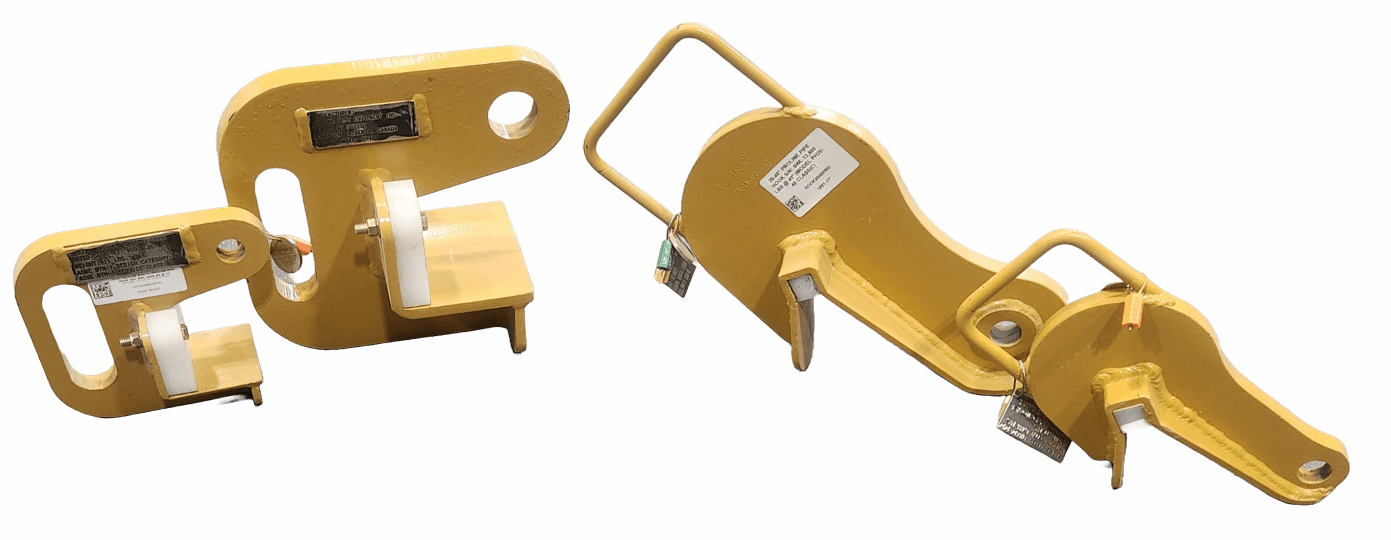
Nuestro proceso de inspección de ganchos para izar tuberías
- Verificación de Certificación de Prueba de Tracción
Se revisa el certificado de prueba de tiro para confirmar que el gancho de elevación de tubería ha superado con éxito las pruebas de carga y cumple con los requisitos del fabricante o de la industria aplicable.
Donde sea que estén disponibles, los documentos de certificación se verifican para garantizar que correspondan al gancho específico que se está inspeccionando.
Si falta la certificación o no se puede verificar, podría ser necesaria una evaluación adicional antes de que el gancho pueda ser aprobado para su uso.
- Inspección de la etiqueta de identificación
Todas las etiquetas de identificación y marcas son inspeccionadas para asegurar que estén presentes y sean legibles.
Información importante típicamente incluye:
- Nombre del fabricante
- Número de modelo
- Número de serie
- Límite de Carga de Trabajo (LCT)
Los ganchos con marcas de identificación faltantes, dañadas o ilegibles podrían no proporcionar información suficiente sobre trazabilidad o capacidad y no deben ponerse en servicio hasta que se evalúen adecuadamente.
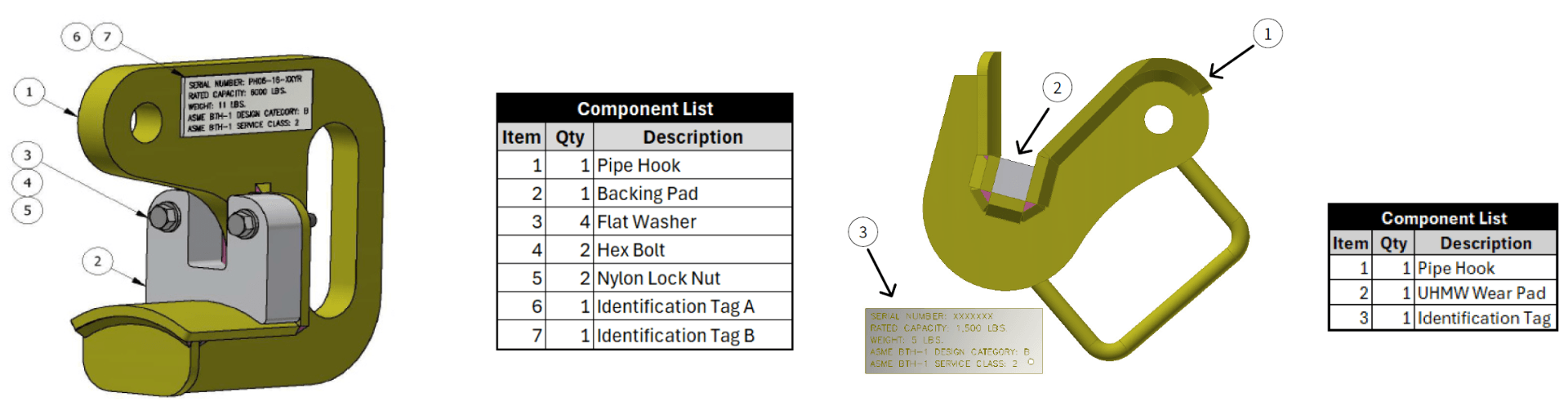
- Verificación de Ensamblado Completo
Cada gancho de elevación de tubería se inspecciona para confirmar que todos los componentes originales están presentes y ensamblados correctamente.
Los componentes faltantes o mal instalados pueden comprometer la operación segura del gancho y deben corregirse antes de su uso.
- Inspección visual de componentes estructurales
Todos los componentes se inspeccionan visualmente en busca de signos de desgaste, daño o deterioro que puedan afectar la resistencia o funcionalidad del gancho.
Los elementos de inspección incluyen:
- Indicaciones de grietas o fracturas
- Componentes doblados, torcidos o deformados
- Desgaste excesivo en las superficies de contacto
- Rayaduras profundas, hendiduras o daños por impacto
- Corrosión, óxido o picadura
- Evidencia de soldadura, esmerilado o modificaciones no autorizadas
- Daño por calor o decoloración
- Deformación alrededor de áreas que soportan carga
Cualquier condición que pueda afectar la integridad estructural del gancho de elevación de tuberías es motivo de evaluación adicional o retirada de servicio.
- Inspección de sujetadores y conexiones
Todos los tornillos, pernos, pasadores, clips de retención y otros componentes de sujeción se inspeccionan para asegurar que estén:
- Presentar
- Instalado correctamente
- Seguro y apretado
- Libre de desgaste o daño excesivo
Los sujetadores flojos o dañados pueden provocar fallas en los componentes durante las operaciones de izaje y deben ser reparados o reemplazados antes de que el gancho vuelva a entrar en servicio.
Inspecciones en curso por parte del propietario
Los ganchos para izar tubería deben ser inspeccionados visualmente por el operador antes de cada uso y periódicamente por personal calificado a lo largo de su vida útil.
Los usuarios deben verificar regularmente:
- Etiquetas de identificación faltantes
- Grietas o daños estructurales
- Desgaste excesivo
- Corrosión
- Cierres flojos
- Componentes faltantes
- Operación inadecuada de piezas móviles
Cualquier gancho que muestre signos de daño o condición dudosa debe ser retirado de servicio inmediatamente e inspeccionado por una persona calificada.
Recordatorio de seguridad
Los ganchos para elevación de tuberías están diseñados únicamente para aplicaciones de elevación y siempre deben usarse dentro de su Límite de Carga de Trabajo nominal. La inspección, el mantenimiento y las prácticas de elevación seguras son esenciales para prevenir fallas del equipo, daños a la propiedad, lesiones graves o la muerte.
Si tiene preguntas sobre la inspección, certificación o el uso seguro de un gancho para levantar tuberías, no dude en contactar a nuestro equipo para recibir asistencia.
 Spanish
  English
  French