Les projets de construction de pipelines suivent rarement des tracés parfaitement rectilignes. Le relief naturel, les passages de routes, les traversées d'eau, les limites de propriété et les exigences d'ingénierie obligent souvent les pipelines à changer de direction. Pour réaliser ces changements de direction tout en préservant l'intégrité structurelle du tuyau, les entrepreneurs s'appuient sur des équipements spécialisés connus sous le nom de cintreuses de tuyaux.
Les cintreuses de tuyaux sont un équipement essentiel dans la construction moderne de pipelines, permettant aux entrepreneurs de créer des courbures précises qui correspondent aux spécifications du projet sans compromettre la résistance du tuyau. Dans ce guide, nous expliquerons ce qu'est une cintreuse de tuyaux, son fonctionnement, les différents types disponibles et pourquoi le cintrage approprié est essentiel à la réussite de l'installation de pipelines.
Qu'est-ce qu'une cintreuse de tuyaux ?
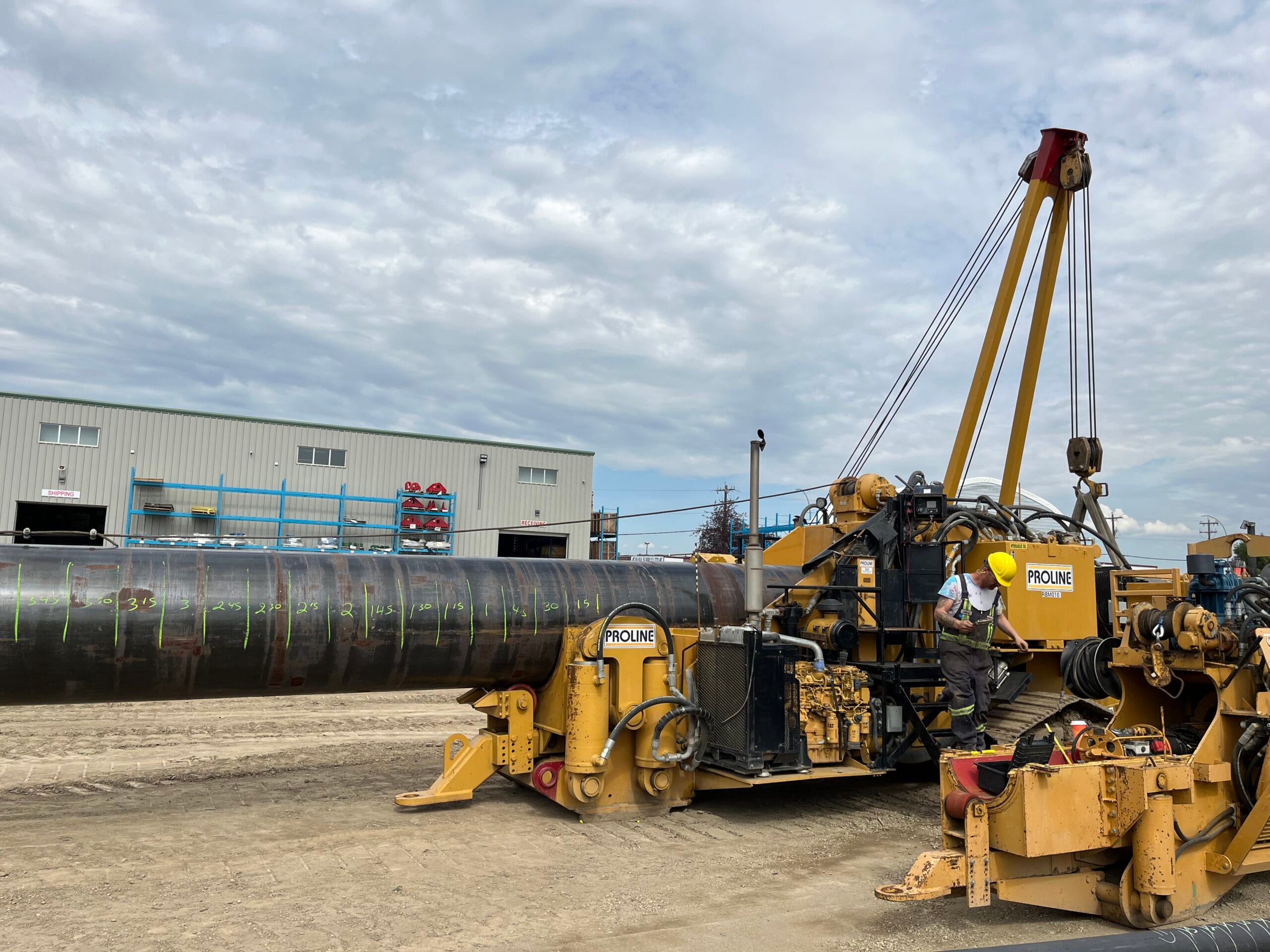
Une cintreuse de tubes est un équipement spécialisé conçu pour cintrer les tubes en acier selon un angle ou un rayon spécifique sans causer de déformation excessive, de plissement ou de dommages à la paroi du tube.
Dans la construction de pipelines, les coudes de tuyaux sont souvent nécessaires pour naviguer les changements de terrain, éviter les obstacles et suivre les tracés conçus. Plutôt que de se fier uniquement à des raccords fabriqués en usine, les entrepreneurs peuvent utiliser des cintreuses pour créer des courbes douces et progressives directement sur le chantier.
Les courbes résultantes contribuent à maintenir des caractéristiques d'écoulement efficaces tout en réduisant le nombre de soudures et de raccords requis dans l'ensemble du système de tuyauterie.
Pourquoi les coudes de tuyauterie sont-ils nécessaires ?
Les tracés de pipelines rencontrent fréquemment des obstacles et des changements d'altitude qui rendent l'installation de tuyaux droits peu pratique.
Les raisons courantes de cintrer un tuyau incluent :
- Suite aux changements de terrain
- Traverser des rivières et des cours d'eau
- Traversée de routes et de services publics
- Éviter les obstacles souterrains
- Alignements d'itinéraires d'ingénierie concordants
- Réduction du besoin de raccords préfabriqués
La flexion de tubes permet aux entrepreneurs de créer des configurations de tuyaux personnalisées tout en maintenant l'efficacité du projet et en minimisant les coûts d'installation.
Comment fonctionne une cintreuse ?
Les cintreuses appliquent une force contrôlée au tuyau tout en le supportant tout au long du processus de cintrage.
L'objectif est de créer un cintrage lisse qui respecte l'angle et le rayon requis tout en maintenant une géométrie de tuyau acceptable.
Le processus général comprend :
1. Positionnement du tuyau
Le tronçon de tuyau est chargé dans la cintreuse et correctement aligné selon l'emplacement de pliage souhaité.
Les opérateurs mesurent et marquent soigneusement le tuyau pour s'assurer que la courbure s'effectue à la bonne position.
2. Application de pression contrôlée
Les vérins hydrauliques génèrent la force nécessaire pour plier le tuyau.
La machine applique progressivement une pression tandis que des supports spécialisés aident à répartir uniformément les charges sur la surface du tuyau.
Ce processus contrôlé empêche les concentrations de contraintes excessives et aide à maintenir l'intégrité structurelle du tuyau.
3. Surveillance de l'angle de flexion
Alors que le tuyau commence à se courber, les opérateurs surveillent en continu l'angle et le rayon de courbure.
Les machines modernes incluent souvent des systèmes de mesure qui permettent aux opérateurs d'obtenir des résultats très précis.
4. Vérification de la géométrie du tuyau
Une fois le cintrage terminé, le tuyau est inspecté pour s'assurer qu'il répond aux tolérances du projet en matière de :
- Angle de pliage
- Ovale
- Déformation du mur
- Rides
- Précision dimensionnelle globale
Le tuyau doit satisfaire aux spécifications d'ingénierie avant que l'installation puisse commencer.
Composants principaux d'une machine à cintrer les tubes
Bien que les conceptions varient, la plupart des machines à cintrer les tuyaux comprennent plusieurs composants clés.
Système hydraulique
Le système hydraulique génère la force nécessaire pour cintrer les tuyaux en acier à paroi épaisse.
Une performance hydraulique adéquate est essentielle pour obtenir des cintres réguliers et constants.
Matrice de pliage
La matrice de cintrage soutient le tuyau pendant le processus de cintrage et aide à créer le rayon désiré.
Assemblages de bride
Les colliers de serrage maintiennent le tuyau en position et empêchent tout mouvement indésirable pendant le fonctionnement.
Système de contrôle
Les commandes permettent aux opérateurs de gérer la pression, l'angle de pliage et le fonctionnement de la machine en toute sécurité et avec précision.
Rouleaux de support
Les rouleaux aident à soutenir la tuyauterie et à réduire les contraintes localisées pendant le cintrage.
Types de cintreuses
Plusieurs types d'équipements de cintrage de tuyaux sont utilisés dans l'industrie des pipelines.
Tubes Giratoires à Froid
Le cintrage à froid est la méthode la plus couramment utilisée dans la construction de pipelines.
Le tuyau est cintré à température ambiante à l'aide d'une force hydraulique, sans chauffer le matériau.
Les avantages comprennent :
- Opérations sur le terrain plus rapides
- Réduction des coûts d'exploitation
- Conditions matérielles minimales
- Qualité de pliage constante
Le cintrage à froid est couramment utilisé pour les pipelines de transmission de grand diamètre.
Systèmes de pliage à chaud
Dans certaines applications, de la chaleur peut être appliquée pour faciliter le pliage.
Le cintrage à chaud est généralement utilisé dans des situations spécialisées où des rayons de courbure plus serrés ou des exigences matérielles uniques existent.
Acheter de l'équipement de cintrage
Certains coudes sont fabriqués dans des environnements d'atelier contrôlés avant d'être livrés sur le chantier.
L'atelier de pliage permet un contrôle qualité et une inspection précis.
Industries courantes qui utilisent des machines de cintrage de tuyaux
Le matériel de cintrage de tubes est utilisé dans un large éventail d'industries, notamment :
Construction de pipeline
Les projets de pipelines de pétrole, de gaz, d'eau et de transport nécessitent fréquemment des coudes sur site pour suivre les alignements de tracé.
Infrastructures énergétiques
Les centrales électriques et les installations industrielles utilisent souvent des systèmes de tuyauterie cintrés.
Installations pétrochimiques
Les raffineries et les usines de traitement s'appuient sur des réseaux de tuyauterie précisément courbés.
Réseaux d'eau municipaux
Les projets de transmission et de distribution d'eau incorporent couramment des sections de tuyaux courbés.
Avantages de l'utilisation des machines de cintrage de tuyaux
Un cintrage de tuyau approprié offre plusieurs avantages par rapport à l'utilisation de plusieurs raccords ou sections fabriquées.
Nombre de soudures réduit
Chaque raccord introduit des soudures supplémentaires qui nécessitent une inspection et des essais.
Les courbes de champ peuvent réduire le nombre de soudures tout au long du pipeline.
Amélioration des caractéristiques d'écoulement
Les courbes douces créent généralement moins de perturbations de flux que plusieurs raccords.
Réduire les coûts des matériaux
Réduire le nombre de raccords et de composants fabriqués peut contribuer à abaisser les coûts globaux du projet.
Efficacité d'installation accrue
La flexion sur site permet aux entrepreneurs de s'adapter aux conditions changeantes du chantier tout en respectant les délais de construction.
Flexibilité d'itinéraire améliorée
Les entrepreneurs peuvent créer des courbures personnalisées qui correspondent étroitement aux conditions réelles du terrain.
Défis courants lors du cintrage de tuyaux
Le cintrage de tuyaux nécessite des opérateurs qualifiés et un équipement correctement entretenu.
Les défis potentiels incluent :
Ovale
Une déformation excessive peut rendre le tuyau ovale.
Rides
Un support inadéquat peut entraîner des plis sur le rayon intérieur du pli.
Amincissement des parois
Le rayon extérieur du pli peut subir une réduction de paroi si les procédures de pliage ne sont pas correctement contrôlées.
Retour élastique
L'acier tente naturellement de retrouver sa forme originale après avoir été plié.
Les opérateurs doivent tenir compte du retour élastique pour déterminer les angles de pliage finaux.
L'importance d'un entretien adéquat de l'équipement
Comme tout équipement de construction lourd, les cintreuses de tuyaux nécessitent un entretien régulier pour fonctionner de manière fiable.
L'entretien courant comprend généralement :
- Inspections du système hydraulique
- Entretien du cylindre
- Inspection des tuyaux et des raccords
- Lubrification des composants mobiles
- Inspections structurelles
- Étalonnage et vérification des performances
Un entretien adéquat permet de réduire les temps d'arrêt, d'améliorer la précision de la flexion et de prolonger la durée de vie de l'équipement.
Pour les entrepreneurs qui envisagent l'achat d'équipements, les machines à cintrer les tuyaux entièrement remises à neuf peuvent souvent offrir d'excellentes performances tout en réduisant les coûts d'investissement en capital.
Considérations de sécurité
Le cintrage de tuyaux implique des forces considérables et des matériaux lourds, ce qui fait de la sécurité une priorité absolue.
Les meilleures pratiques comprennent :
- Conformément aux procédures d'exploitation du fabricant
- Effectuer les inspections avant utilisation
- En utilisant des opérateurs dûment formés
- Maintien de zones de travail sécuritaires
- Surveillance des performances du système hydraulique
- Inspection des supports et des colliers de tuyauterie avant le fonctionnement
Un programme de sécurité solide aide à protéger le personnel tout en garantissant des résultats de pliage constants.
Conclusion
Les cintreuses de tuyaux sont des outils essentiels dans la construction de pipelines, permettant aux entrepreneurs de créer des cintres précis qui s'adaptent aux changements de terrain et aux exigences du projet. En appliquant une force hydraulique contrôlée, ces machines produisent des cintres lisses et constants tout en préservant l'intégrité du tuyau et en minimisant le besoin de raccords supplémentaires.
Qu'ils soient utilisés sur des pipelines de transmission, des projets de services publics ou des installations industrielles, les cintreuses de tuyaux contribuent à améliorer l'efficacité, à réduire les coûts et à garantir que les pipelines sont installés conformément aux spécifications de conception. Comprendre le fonctionnement de ces machines et les entretenir correctement peut aider les entrepreneurs à maximiser leur productivité et à obtenir des résultats de haute qualité sur le terrain.
 French
  English
  Spanish