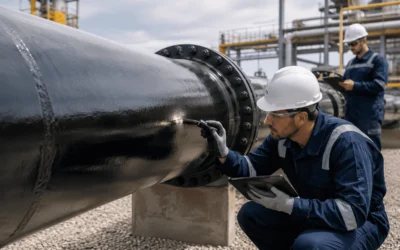
Pipeline Coating Inspection Standards, Repairs, and Best Practices
Inspecting a pipeline coating is more than simply looking for visible damage. A complete coating inspection program can involve multiple testing methods, documented procedures, applicable industry standards, and inspections at different stages of pipeline...
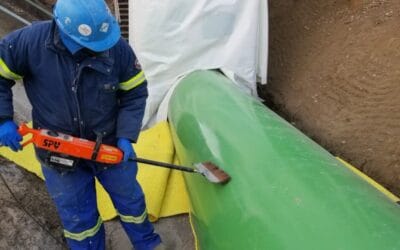
Pipe Coating Inspection: Methods and Common Defects
Pipeline coatings play an important role in protecting steel pipe from corrosion, moisture, chemicals, and mechanical damage. However, even a properly selected coating system can fail to provide the expected protection if it is damaged, improperly applied, or not...
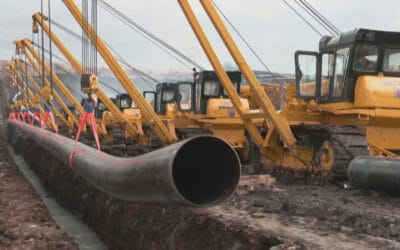
What Is Springback in Pipe Bending and How Can It Be Controlled?
Pipe bending is a controlled process, but steel does not always stay exactly where it is placed after the bending force is removed. A pipe may partially return toward its original shape after it has been bent. This phenomenon is known as springback. Springback is an...
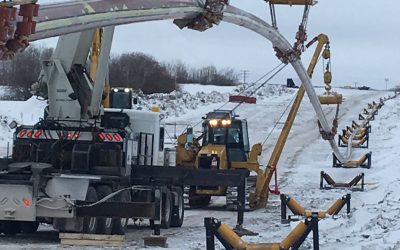
Pipeline Pipe Handling Equipment: A Complete Guide
Handling large-diameter pipe is one of the most important parts of pipeline construction. Before a pipe is welded, coated, or installed, it may need to be unloaded, transported, positioned, rotated, aligned, and supported several times. Using the right equipment can...
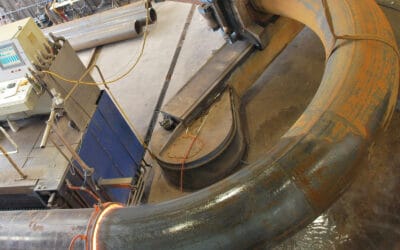
Cold Bending vs. Hot Bending Pipe: What’s the Difference?
Pipe bending is an essential part of many pipeline construction projects. Pipelines rarely run in a perfectly straight line, so pipe must often be bent to follow changes in terrain, road crossings, river crossings, and other changes in direction. The method used to...
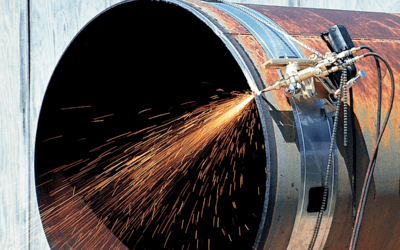
How to Choose the Right Pipe Beveling Machine for Your Project
Preparing the end of a pipe correctly is one of the first steps toward producing a quality weld. For pipeline contractors, the right pipe beveling machine can make pipe preparation faster, more consistent, and more efficient. With different beveling machines available...
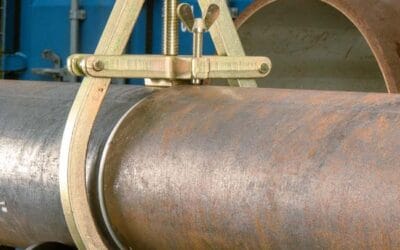
What Causes Hi-Lo in Pipeline Welding and How to Prevent It
Proper pipe alignment is one of the most important steps in pipeline welding. When two pipe ends are not aligned correctly, the difference in their internal or external surfaces is commonly referred to as hi-lo or internal misalignment. Hi-lo can make welding more...
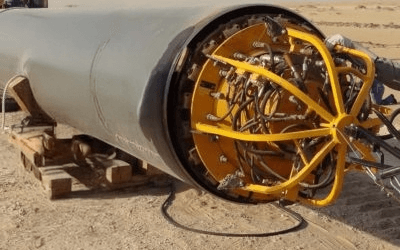
Internal vs. External Pipe Line-Up Clamps: Which One Should You Use?
When two sections of pipe need to be joined together for welding, proper alignment is critical. Even a small amount of misalignment can create welding problems, increase rework, and affect the quality of the finished pipeline. Pipe line-up clamps are designed to help...
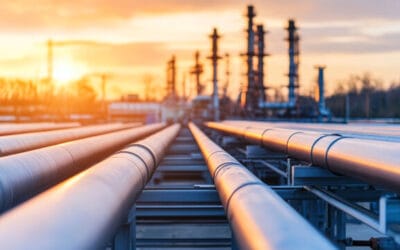
How Technology Is Changing Pipeline Construction
The pipeline construction industry has always relied on skilled workers, heavy equipment, and proven construction methods. While those fundamentals remain unchanged, advances in technology are transforming how pipelines are planned, built, inspected, and maintained....
How Pipeline Equipment Improves Jobsite Safety
Safety is a top priority on every pipeline construction project. From material handling and welding to bending and coating, each stage of the job presents unique hazards that must be carefully managed. While proper training and safety procedures are essential, using...
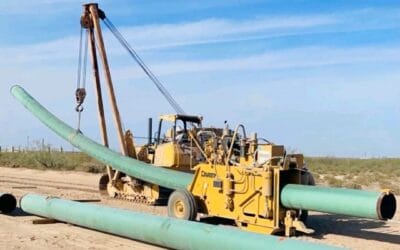
Common Pipe Bending Mistakes (And How to Avoid Them)
Whether you're working on a cross-country transmission pipeline or fabricating piping for an industrial facility, proper pipe bending is critical to maintaining the integrity of the pipe and meeting project specifications. Even experienced operators can encounter...
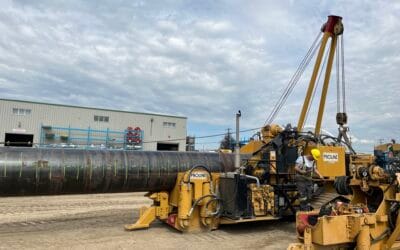
What Is a Pipe Bending Machine and How Does It Work?
Pipeline construction projects rarely follow perfectly straight paths. Natural terrain, road crossings, water crossings, property boundaries, and engineering requirements often require pipelines to change direction. To create these directional changes while...
 English
  Spanish
  French